
Fish-Shaped Ichthyosaur
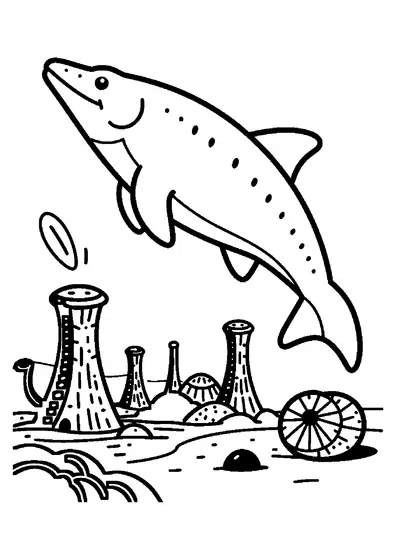
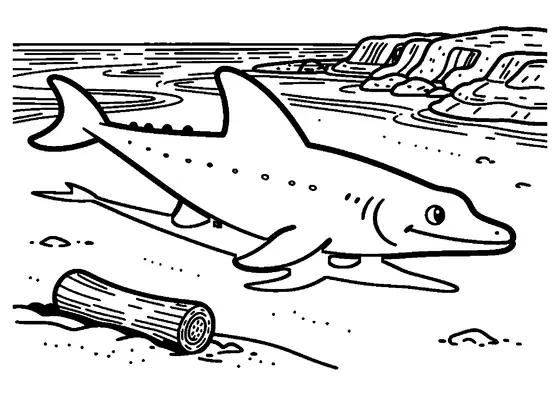
An ichthyosaur with a dolphin-like body, long snout, large eye, dorsal fin, and powerful tail glides sideways underwater.

A4 format (landscape), black outlines on a white background · for home and classroom use
All coloring pages: Flying and Sea Reptile Coloring Pages
Similar coloring pages: Flying and Sea Reptile Coloring Pages



What else can you print? Free, no account needed
Custom Name Coloring Pages
Enter your child's name to generate a custom coloring page featuring large outline letters to color and decorate.
Open generator →Connect the Dots Generator
Eight connect-the-dots pictures across three difficulty levels. Features faint outline guides for younger children and dots only for older kids.
Open generator →Printables
Worksheets, tracing lines, mazes and dot-to-dots in A4.
Browse printables →
Streamlined Ichthyosaur Swimming Sideways
An ichthyosaur moves laterally through ancient seawater, showing a long snout, large eye, dorsal fin, and a strong tail fin. Although it resembles a modern dolphin in overall shape, this ocean dweller was actually a prehistoric reptile that adapted fully to aquatic life millions of years ago.
Convergent Evolution in Ancient Marine Life
The dolphin-like silhouette of the ichthyosaur is one of the clearest examples of convergent evolution in fossil history. Reptiles and modern mammals independently evolved similar body forms to overcome water resistance in open sea environments. Unlike fish, ichthyosaurs moved their tail side to side while using small side flippers for steering.
Realistic Colors of an Ichthyosaur
- Top skin layer: Dark bluish-gray or deep ocean blue for countershading
- Underbelly: Pale silver-gray or whitish tone
- Dorsal fin: Dark slate gray matching the upper spine
- Long snout and jaw: Dark gray with pale gray underside
- Tail fin: Uniform dark ocean blue or charcoal