
Euoplocephalus on a Desert Rock Ledge
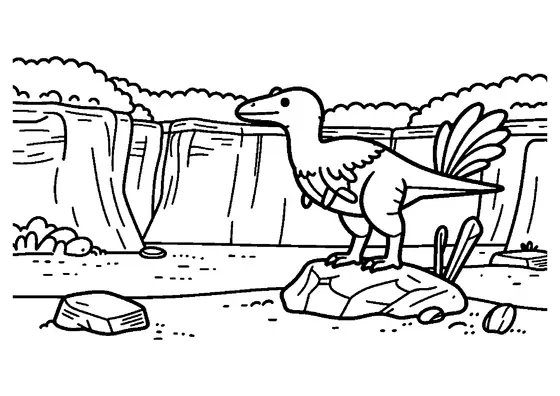
A heavy Euoplocephalus with a bony tail club stands atop a sandy, rock-covered ledge in an arid desert setting.

A4 format (landscape), black outlines on a white background · for home and classroom use
All coloring pages: Dinosaur Coloring Pages
Similar coloring pages: Dinosaur Coloring Pages


What else can you print? Free, no account needed
Custom Name Coloring Pages
Enter your child's name to generate a custom coloring page featuring large outline letters to color and decorate.
Open generator →Connect the Dots Generator
Eight connect-the-dots pictures across three difficulty levels. Features faint outline guides for younger children and dots only for older kids.
Open generator →Printables
Worksheets, tracing lines, mazes and dot-to-dots in A4.
Browse printables →
Euoplocephalus on a Desert Rock Ledge
Euoplocephalus was one of the largest armored dinosaurs, known for its heavy armor plating and powerful tail club. This scene captures the herbivore positioned on a sandy stone ledge surrounded by rugged desert topography.
Prehistoric Facts About Euoplocephalus
Euoplocephalus possessed armored eyelids, spiked shoulder plates, and a massive bony club at the end of its tail. Its head was protected by heavy bone armor, leaving very few vulnerable areas exposed to carnivores. Fossils show that it had broad beak-like mouth structures used to crop tough desert ferns and shrubs near ground level.
Realistic Colors for Euoplocephalus and Desert Rocks
- Euoplocephalus armor: dusty tan, sandstone orange, and dark brown plates
- Tail club: hard stone gray, charcoal, and dark brown
- Sandy desert ledge: warm yellow-beige, light buff, and golden sand
- Desert rock formations: terracotta red, ochre, and deep brown