
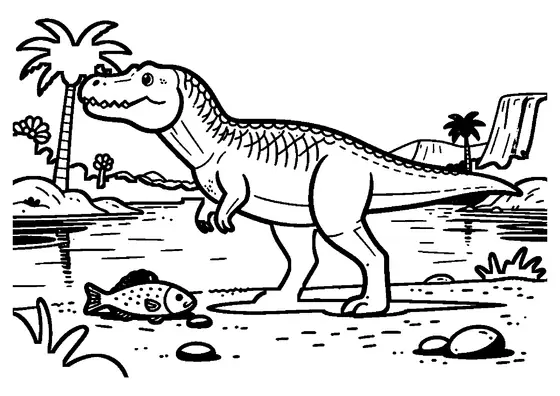
Centrosaurus at the Edge of a Sandy Valley
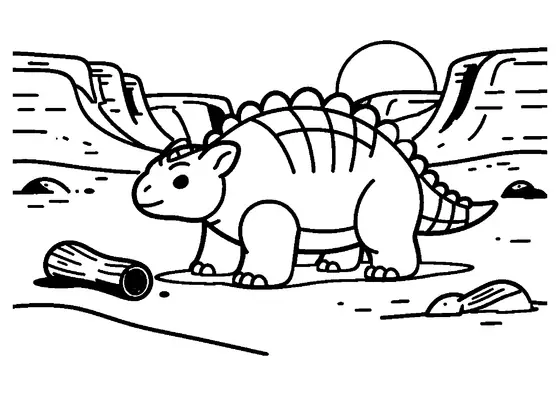
A horned Centrosaurus observes the wide landscape while standing near the rim of a sandy valley.

A4 format (portrait), black outlines on a white background · for home and classroom use
All coloring pages: Dinosaur Coloring Pages
Similar coloring pages: Dinosaur Coloring Pages

What else can you print? Free, no account needed
Custom Name Coloring Pages
Enter your child's name to generate a custom coloring page featuring large outline letters to color and decorate.
Open generator →Connect the Dots Generator
Eight connect-the-dots pictures across three difficulty levels. Features faint outline guides for younger children and dots only for older kids.
Open generator →Printables
Worksheets, tracing lines, mazes and dot-to-dots in A4.
Browse printables →
Centrosaurus near a Sandy Valley
A Centrosaurus with a prominent nose horn stands along the open border of a dry, sandy valley. The surrounding terrain reflects a vast prehistoric landscape where riverbeds and arid valleys formed natural paths across ancient habitats.
Adaptations of Centrosaurus
Centrosaurus was a herbivorous dinosaur recognized by the large single horn growing directly on its snout and a protective neck frill. These creatures often inhabited floodplains and valleys where seasonal water flow created sandy soil and river deposits. Living in herds helped protect individual dinosaurs from predators roaming open valley borders.
Colors of Centrosaurus and Valley Terrain
- Centrosaurus skin: dusty brown, grayish green, or earthy ochre
- Centrosaurus nose horn: off-white, light tan, or dark gray
- Neck frill spikes: muted amber or slate gray
- Sandy valley ground: warm beige, pale yellow, or golden brown