
Carcharodontosaurus by a Dry Riverbed
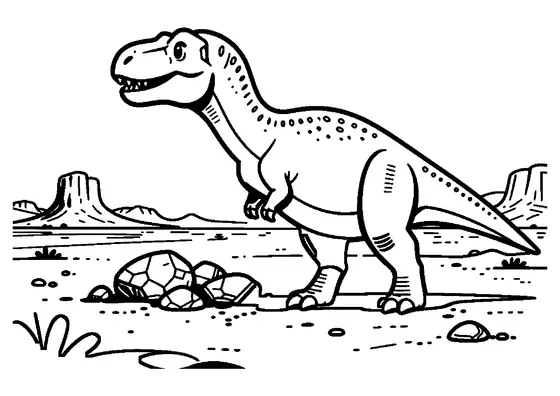
A Carcharodontosaurus travels along the dry bed of a prehistoric river in a harsh landscape.

A4 format (portrait), black outlines on a white background · for home and classroom use
All coloring pages: Dinosaur Coloring Pages
Similar coloring pages: Dinosaur Coloring Pages


What else can you print? Free, no account needed
Custom Name Coloring Pages
Enter your child's name to generate a custom coloring page featuring large outline letters to color and decorate.
Open generator →Connect the Dots Generator
Eight connect-the-dots pictures across three difficulty levels. Features faint outline guides for younger children and dots only for older kids.
Open generator →Printables
Worksheets, tracing lines, mazes and dot-to-dots in A4.
Browse printables →
Carcharodontosaurus beside a dried-up river
The scene centers on Carcharodontosaurus walking through a riverbed from which the water has disappeared. The exposed channel provides the setting for this huge carnivorous dinosaur and suggests a period of severe dryness. Only the predator and the dried river environment are confirmed, so no living plants, prey, or flowing water are implied.
Interesting facts about Carcharodontosaurus
Carcharodontosaurus inhabited northern Africa during the Cretaceous, when the region included extensive river systems as well as seasonally dry areas. Its name means “shark-toothed lizard,” referring to the flattened, serrated shape of its teeth rather than to any close relationship with sharks. A riverbed may dry out when seasonal rainfall declines or when a river changes its course.
Authentic colors for the dinosaur and riverbed
- Carcharodontosaurus skin: no definitive color is known; dusty brown, olive, tan, or subdued gray are plausible
- Teeth: cream or aged ivory
- Mouth and gums: muted pink to dark reddish pink
- Claws: dark brown, charcoal, or black keratin
- Dry riverbed: sandy beige, clay brown, ocher, or gray