
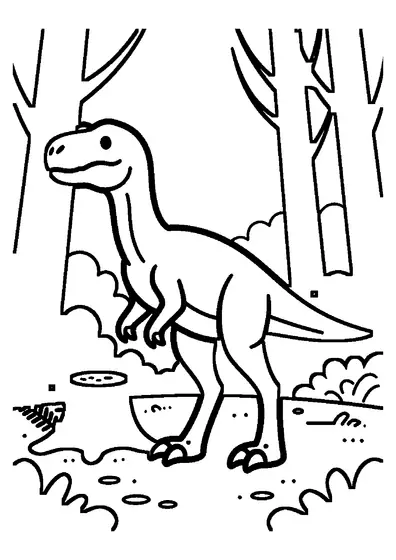
Spinosaurus on the Marshy Shore of an Ancient Lake
A sail-backed Spinosaurus stands on the marshy shore of an ancient lake in a watery Mesozoic environment.

A4 format (landscape), black outlines on a white background · for home and classroom use
All coloring pages: Dinosaur Coloring Pages
Similar coloring pages: Dinosaur Coloring Pages




What else can you print? Free, no account needed
Custom Name Coloring Pages
Enter your child's name to generate a custom coloring page featuring large outline letters to color and decorate.
Open generator →Connect the Dots Generator
Eight connect-the-dots pictures across three difficulty levels. Features faint outline guides for younger children and dots only for older kids.
Open generator →Printables
Worksheets, tracing lines, mazes and dot-to-dots in A4.
Browse printables →
Spinosaurus by the ancient lake
The scene centers on a Spinosaurus at the marshy edge of a prehistoric lake. Its most recognizable feature is the tall sail rising along its back. The wet shoreline suits what fossils suggest about this unusual predator, which had several adaptations associated with spending time around water.
A predator adapted to watery habitats
Spinosaurus had a long, narrow snout and cone-shaped teeth that could grip slippery prey. Fossil evidence indicates that fish were an important part of its diet, although it may have eaten other animals when opportunities arose. Scientists still discuss exactly how well it swam and how much of its life it spent in water.
Natural colors for Spinosaurus
- Skin: its precise color is unknown; muddy brown, olive, muted green, or gray would suit a natural palette
- Back sail: no original color has been confirmed, so it could match the body or carry darker contrasting tones
- Eyes: brown, amber, or dark reddish brown are plausible choices
- Lake water: often blue, green, brown, or gray depending on depth, sediment, and reflected light
- Marshy shore: commonly dark brown, gray-brown, olive, or sandy tan