
Crocodile on a Nile Sandbank
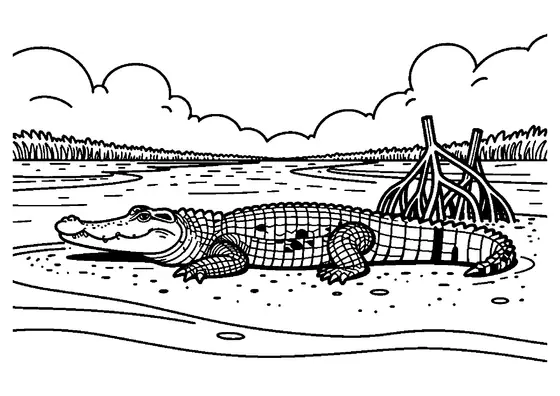
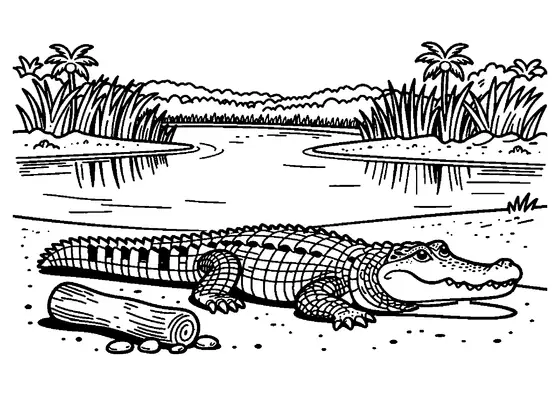
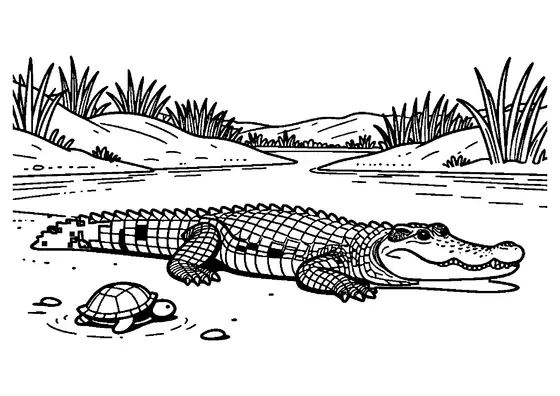
A giant Nile crocodile rests along the sunlit riverbank of Africa's iconic waterway.

A4 format (landscape), black outlines on a white background · for home and classroom use
All coloring pages: African Animal Coloring Pages
Similar coloring pages: African Animal Coloring Pages



What else can you print? Free, no account needed
Custom Name Coloring Pages
Enter your child's name to generate a custom coloring page featuring large outline letters to color and decorate.
Open generator →Connect the Dots Generator
Eight connect-the-dots pictures across three difficulty levels. Features faint outline guides for younger children and dots only for older kids.
Open generator →Printables
Worksheets, tracing lines, mazes and dot-to-dots in A4.
Browse printables →
Nile Crocodile by the River
The Nile crocodile spends warm hours lying still along sandy riverbanks near the water. Its heavy body, tough scales, and thick armored plates on its back allow it to stay comfortably close to the river edge.
Fascinating Facts About the Nile Crocodile
Crocodiles often keep their mouths open while resting on sandbanks to help regulate their body temperature. This behavior allows excess heat to escape without wasting energy. Being semi-aquatic reptiles, they can stay submerged in broad rivers for over half an hour while hunting or escaping heat.
Natural Colors of the Nile Crocodile
- Nile crocodile back: olive green or dark brownish gray
- Crocodile underside: pale yellowish white
- Eyes: dull yellow or light green
- Sandbank: golden yellow or beige
- River water: murky green or blue-gray