
Crocodile in a Mangrove Estuary
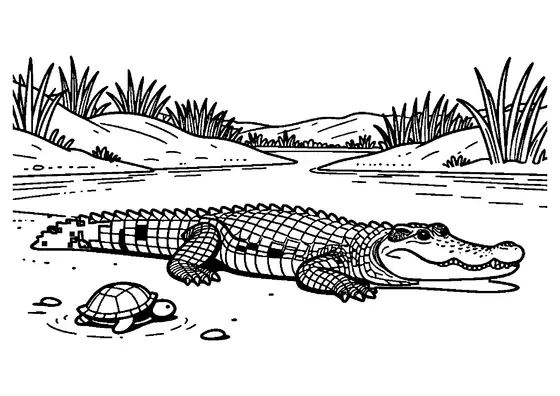
A Nile crocodile rests along a calm coastal estuary surrounded by tangled mangrove roots and gentle water waves.

A4 format (landscape), black outlines on a white background · for home and classroom use
All coloring pages: African Animal Coloring Pages
Similar coloring pages: African Animal Coloring Pages




What else can you print? Free, no account needed
Custom Name Coloring Pages
Enter your child's name to generate a custom coloring page featuring large outline letters to color and decorate.
Open generator →Connect the Dots Generator
Eight connect-the-dots pictures across three difficulty levels. Features faint outline guides for younger children and dots only for older kids.
Open generator →Printables
Worksheets, tracing lines, mazes and dot-to-dots in A4.
Browse printables →
A Nile Crocodile in a Coastal Mangrove Habitat
A long Nile crocodile rests quietly in a brackish mangrove estuary, showing its thick armored scales and muscular tail. Intricate mangrove roots stretch down into the water around the reptile, while broad ripples spread across the surface. These sheltered coastal channels provide an ideal resting ground where large reptiles can regulate their body temperature during hot afternoons.
Life in Mangrove Ecosystems
Mangrove trees grow in coastal waters where saltwater and freshwater mix, creating dense root systems that trap sediment and shelter wildlife. Nile crocodiles frequent these estuarine environments because the calm waters offer excellent hunting opportunities and cover. Their powerful tails propel them smoothly through water, allowing them to glide almost silently without creating large disturbances.
Natural Colors of the Nile Crocodile and Mangrove Waters
- Nile crocodile back: dark olive-green, brownish-gray, or bronze
- Crocodile underside: pale yellowish-cream or off-white
- Mangrove roots and bark: dark reddish-brown, charcoal gray, and muddy brown
- Estuary water: murky greenish-brown or deep teal
- Crocodile eyes: pale yellow or olive-green with vertical slit pupils