
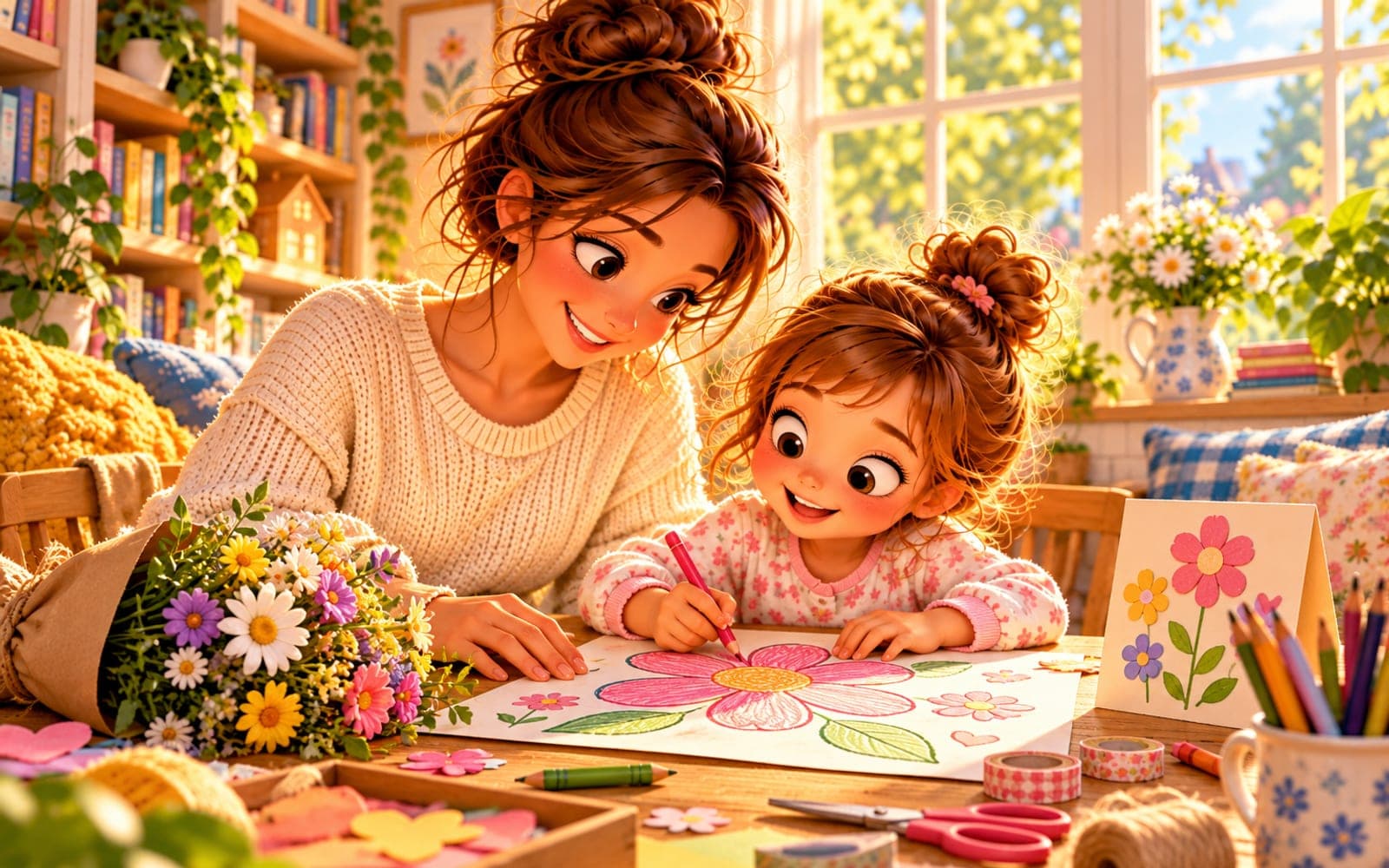
What can you prepare for World Teachers’ Day by tomorrow morning?
For tomorrow, three things are enough: a coloring page, a simple card and one short activity. You can prepare everything with your child in the evening or even in the morning if you choose a simple design and avoid adding too many decorations.
A 15–25 minute plan:
- Choose a simple design from the printable coloring pages.
- Fold an A4 sheet in half and place the colored picture inside or glue it onto the card.
- Ask your child for one sentence of their own, such as “Thank you for reading with us.”
- If you have a few minutes left, add a short activity: a tracing pattern, counting objects, or writing three words connected with school.
You do not need to prepare a large gift. What matters more is that your child chooses the colors, signs the work and knows who they are giving it to. If you only have 10 minutes in the morning, skip the extra decorations and focus on one finished card.
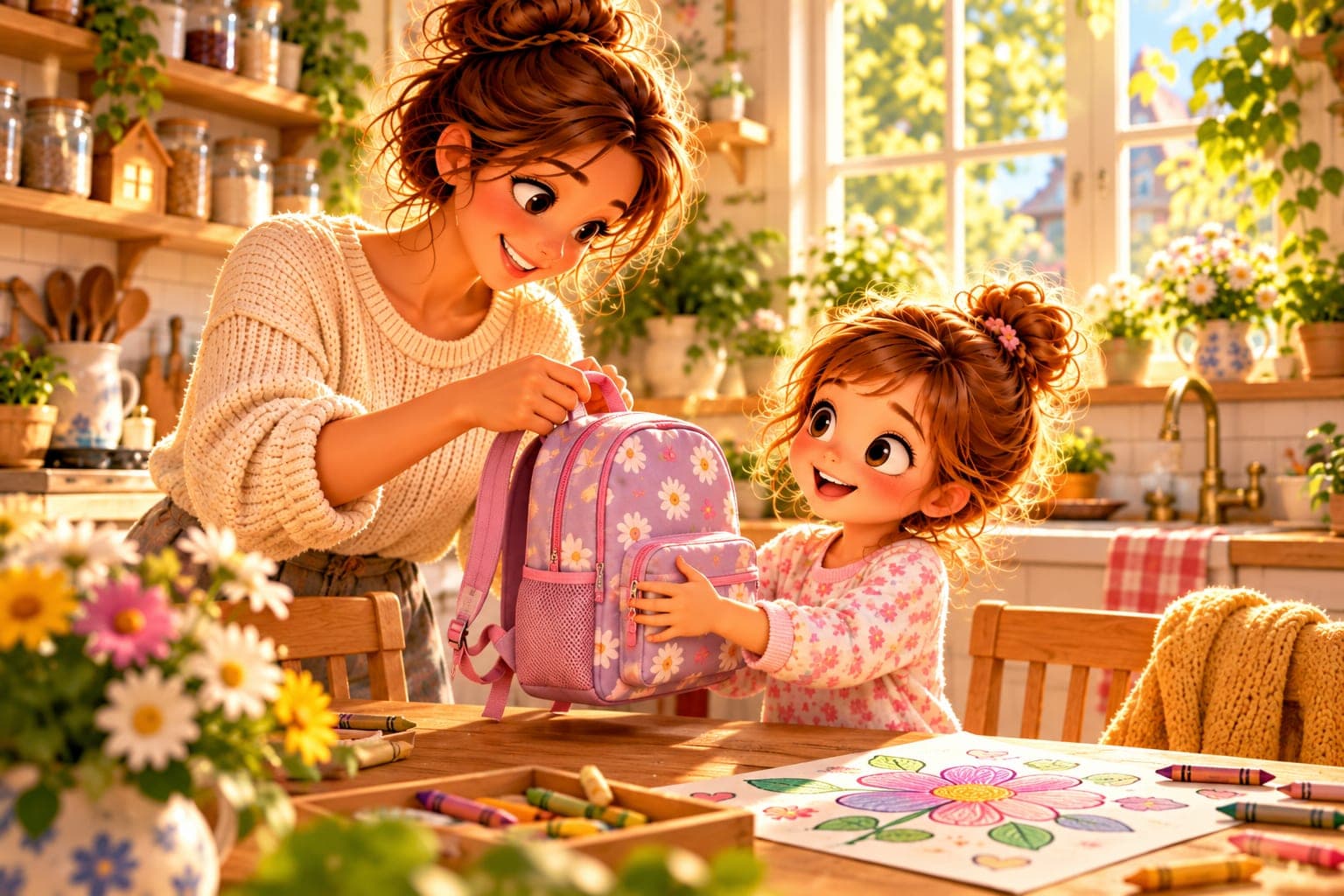
How can you make a simple World Teachers’ Day card?
The simplest card is a folded sheet with the child’s own artwork and a short thank-you message. You do not need decorative paper or a complicated design.
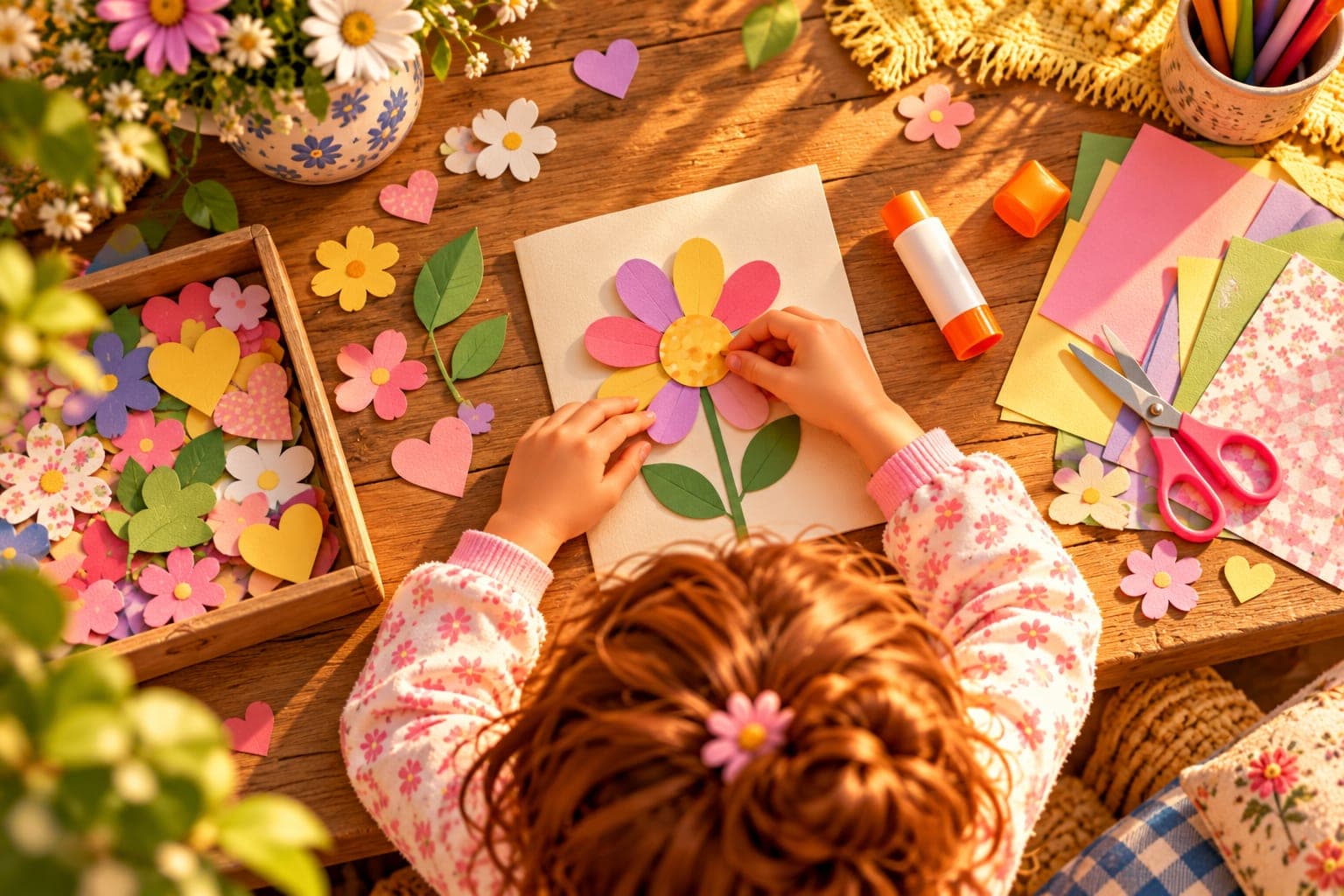
Card step by step:
- fold an A4 sheet in half,
- on the front, glue on a colored flower, heart, book or another simple motif,
- leave room inside for 1–3 sentences,
- a younger child can dictate the message to an adult,
- an older child can write the message independently and sign their name.
A natural sentence might be: “Thank you for helping me when I don’t understand something.” It is better to keep the child’s own voice than turn the message into something overly formal.
If you want a quick base for the activity, browse the printable worksheets. You can use one as part of the card or as a short activity before giving it to the teacher.
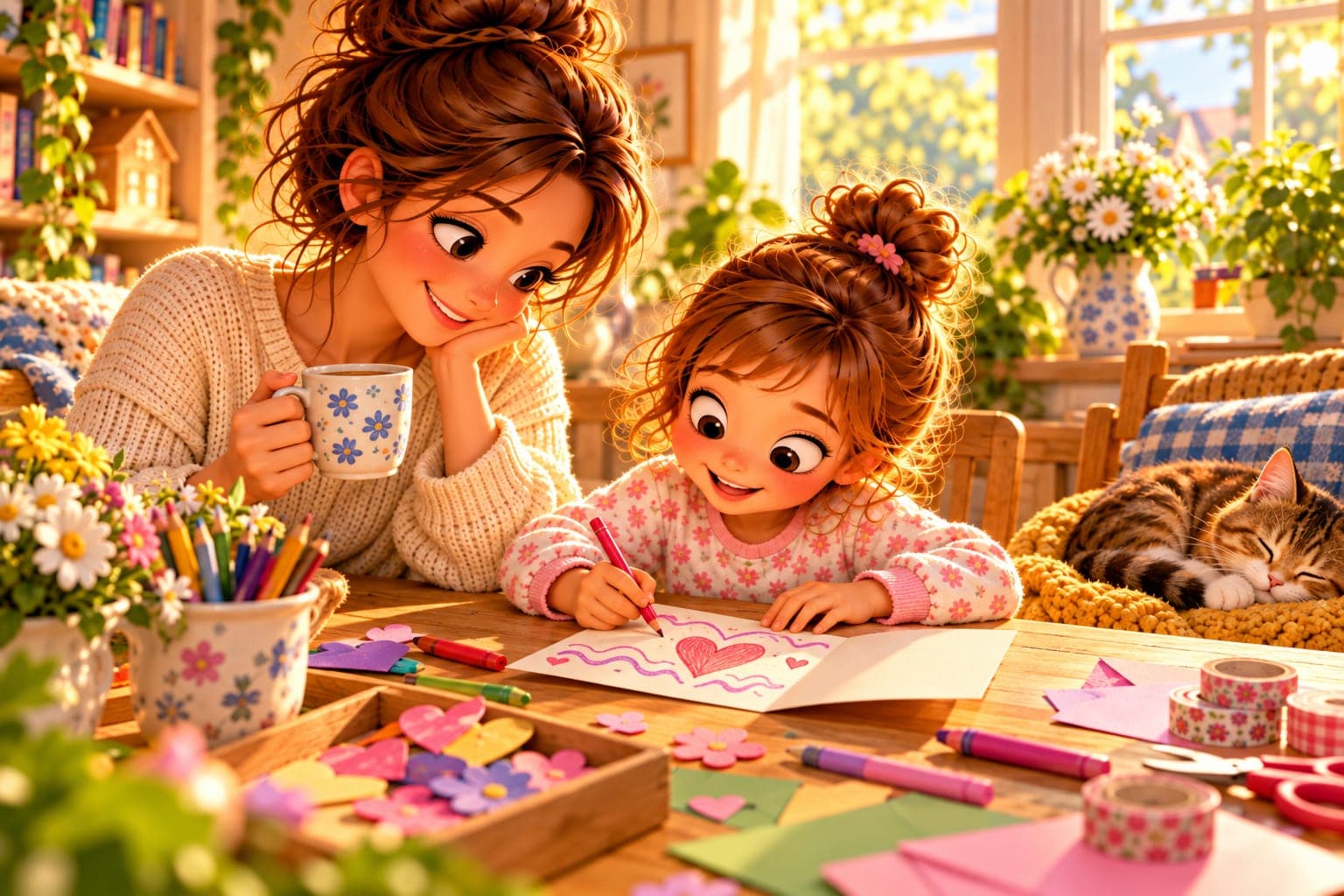
What can a child write in a card for a teacher?
The best messages are short and sound like something the child would really say. Instead of giving them a ready-made poem, offer a sentence starter and let them finish it.
Early years – simple sentences to dictate:
- “Thank you for playing with us.”
- “I like it when you read us stories.”
- “Thank you for helping me when I find something difficult.”
Young primary children – short messages they can write themselves:
- “Thank you for interesting lessons and for helping me.”
- “I like our lessons because I learn a lot.”
- “I hope you have a happy and peaceful day.”
Older primary children – a little longer, but still in a child’s voice:
- “Thank you for patiently explaining difficult problems.”
- “I especially like the lessons when we make or do something together.”
- “I hope you have lots of joy and many interesting ideas for our lessons.”
You do not need to correct every phrase. If the sentence is understandable and genuinely comes from the child, it has more value than perfectly polished adult wording.
How should you match the coloring page and activity to the child’s age?
Match the level of detail to the child’s age and the time you have. A 4-year-old needs large areas, while a 9- or 10-year-old can complete a more detailed design and write a message independently.
Age | Coloring page or card | Short activity | Time |
|---|---|---|---|
Ages 4–5 | large flower, heart, crayons, simple card | finish a tracing pattern, match 3–5 identical pictures | 10–15 min |
Ages 6–7 | bouquet, book, school supplies | count objects, label 2–3 pictures | 15–20 min |
Age 8 | more detailed composition | write 3 things the child wants to thank the teacher for | 15–20 min |
Ages 9–10 | own drawing or carefully colored card | short message, mini acrostic using the teacher’s name | 20–25 min |
For younger children, a simple pre-writing sheet can also work well. One example is wave tracing for ages 3–4 with a coloring picture, if your child enjoys following tracing lines.
What World Teachers’ Day activities work for early years and primary children?
Choose an activity that connects the occasion with a skill appropriate for the child’s age. It does not need to fill a whole lesson or require a separate set of materials.
For younger children:
- color one flower and draw another,
- trace a wave or heart,
- find two matching school objects,
- say one sentence beginning “Thank you for…”.
For young primary children:
- count crayons, books or flowers in a picture,
- think of three words connected with a teacher,
- write one sentence independently in the card,
- put a short thank-you message in the right order from mixed-up words.
For older primary children:
- write 3–4 sentences of thanks,
- prepare a short description: “What I enjoy most in our lessons”,
- make a list of five words connected with school,
- design a card with a signature and date.
If you want to prepare activities for a particular group, use the worksheet generators. This is especially useful when you need several versions at different difficulty levels.
How can you run a 20-minute group activity?
In a group, one shared goal and short roles work best. Each child can contribute one element without waiting for everyone else.
Materials:
- A4 or A5 paper,
- colored pencils or felt-tip pens,
- pencils and erasers,
- child-safe scissors for children who can use them confidently,
- glue,
- 2–3 simple coloring pages or worksheets to choose from.
20-minute plan:
- 3 minutes – talk about ways we can thank a teacher,
- 8 minutes – color or make a small card,
- 5 minutes – write or dictate one sentence,
- 4 minutes – collect the work into a group album or shared poster.
No-printer version: give each child a blank sheet. Draw a simple flower, heart or book on the board for children to copy by hand. For younger children, prepare a cardboard template to trace around. Then color the picture and add one sentence.
For a larger group, prepare two levels of difficulty. One group can color a simple design while another writes a short message. Faster children do not have to wait, and younger children are not forced to finish work that is too difficult.
What mistakes should you avoid with cards and coloring pages?
The most common mistake is doing the work for the child. The result may look neat, but it loses the most important part of a thank-you: the child’s own contribution.
Also avoid:
- designs with tiny details for children aged 4–5,
- long messages that a younger child has to copy,
- an activity that cannot be completed in the available time,
- correcting every uneven shape and every letter,
- adding more decorations when the child is already tired.
A useful rule is: one finished piece is better than three started ones. If your child is losing patience, shorten the task rather than adding more elements.
When is World Teachers’ Day and what does it mark?
World Teachers’ Day is observed on 5 October. UNESCO established it to commemorate the 1966 ILO/UNESCO Recommendation concerning the Status of Teachers and to recognise teachers’ work around the world.
A child does not need a detailed history lesson about the day. It is enough to explain that it is a day to appreciate teachers and other people who support learning.
If you are looking for more simple ideas for activities to do together, also see the parent guide.
Sources
- Ministerstwo Nauki i Szkolnictwa Wyższego, „250. rocznica powołania Komisji Edukacji Narodowej”, 2023: https://www.gov.pl/web/nauka/250-rocznica-powolania-komisji-edukacji-narodowej
- Ministerstwo Edukacji Narodowej, „List ministra Dariusza Piontkowskiego z okazji Dnia Edukacji Narodowej”, 2020: https://www.gov.pl/web/edukacja/list-ministra-dariusza-piontkowskiego-z-okazji-dnia-edukacji-narodowej