
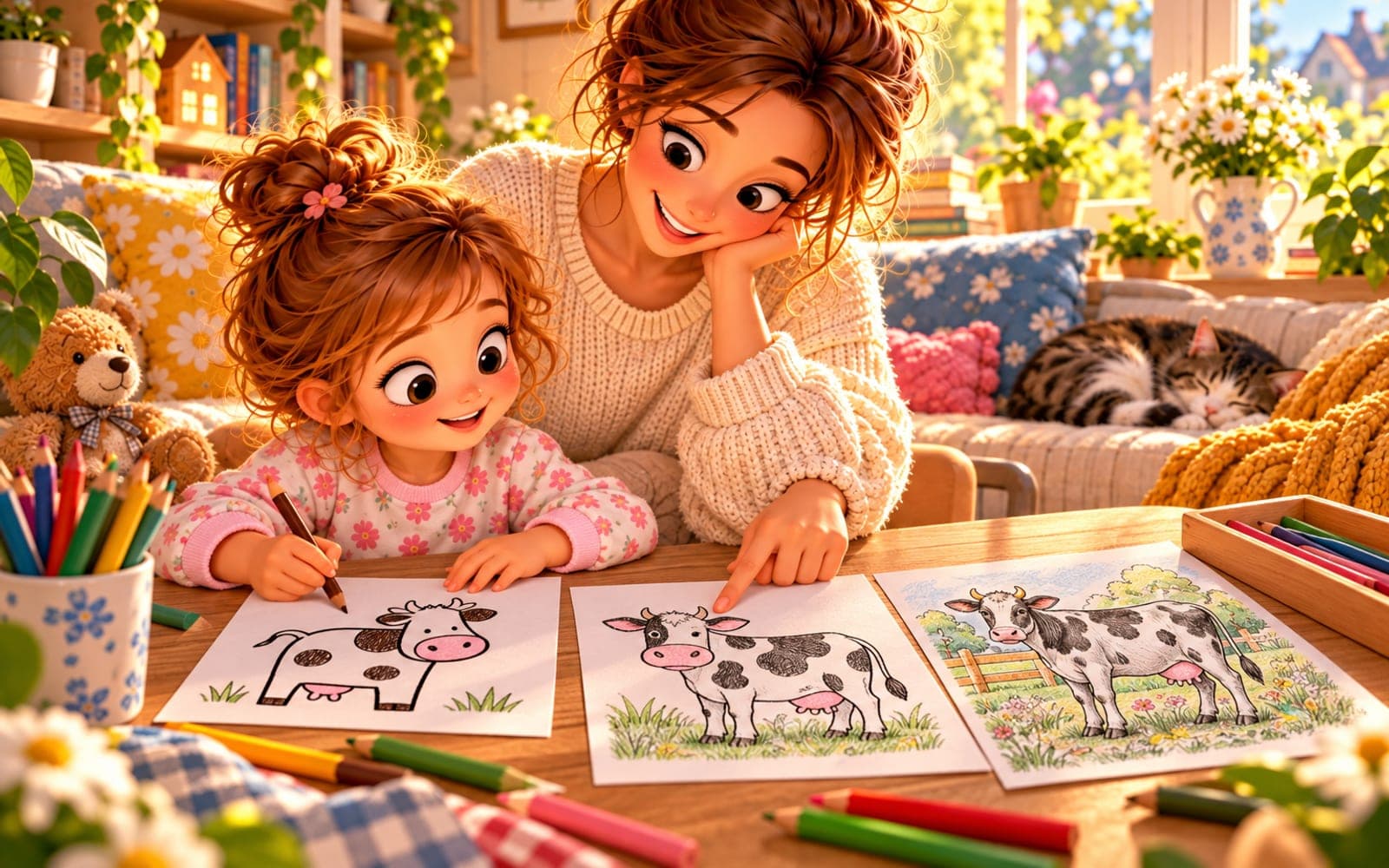
In short: what coloring pages should you choose for a 4-year-old?
- Start with pictures that have clear outlines, large areas and only a few elements.
- Increase one thing at a time: the number of elements, the amount of background detail or the size of the smallest areas.
- Do not expect perfect coloring inside the lines. At age 4, going over the outline is part of learning hand control.
- If your child comfortably finishes the picture and starts looking for extra details, try the next level.
- If your child quickly becomes discouraged, grips the crayon very tightly or skips small areas, go back to an easier page.
A good starting point is coloring pages for kids. Choose themes your child knows from everyday life, because that makes it easier to talk about the picture and maintain interest.
You can also add short activities for a 4-year-old: first counting to 5, colors and shapes, rhymes and simple tracing patterns (3–5 minutes with an adult).
How can you tell whether a coloring page is right for a 4-year-old?
Look at four things first: the outline, the size of the areas, the number of elements and the background. The aim is not to fit your child into a rigid norm, but to choose a picture that gives the hand some work while keeping the activity enjoyable.
Level | Outlines and areas | Number of elements and background | Example |
|---|---|---|---|
| thick outline, large areas | 1 main object, no background | large tractor or cow |
| clear outline, several medium-sized areas | 2–4 elements, one simple background detail | cow, fence and sun |
| outline still clear, some smaller areas | several objects, simple background | car on a road with a tree |
| some areas are noticeably smaller | more details, but the scene remains clear | dinosaur among rocks and plants |
These levels are a practical scale for choosing material, not a developmental standard. Two 4-year-olds may need completely different pictures on the same day.
To begin, you can print a simple scene from farm animals. If your child likes vehicles, use the same principle with car coloring pages.
How can you increase detail step by step?
Change one thing at a time. That makes it easier to see whether the difficulty comes from the number of elements, small areas or a busier background.
Start with one large object without many details. In the next picture, add a second object, such as a ball beside a dog. Later, introduce a simple background: grass, a cloud or a road. Only then choose pictures with smaller sections such as wheels, scales, spots or individual leaves.
A child who enjoys bold themes can practise with dinosaur coloring pages. Another engaging option is a coloring page with the child’s name, because seeing their own name can increase personal interest, although the drawing itself should still match the child’s level.
How can you tell when it is time for a harder picture?
The best signal is your child’s behaviour while coloring, not an age label on the page. You can offer a harder picture when your child:
- finishes most of the chosen picture without frustration,
- moves independently from large areas to smaller ones,
- slows the hand near an outline,
- changes crayon pressure to make a lighter or darker mark,
- notices details and asks what else can be colored.
You do not need to wait until every area is filled in “perfectly.” If your child is curious about the next level, try it and watch how they respond.
How can you tell when a coloring page is too difficult?
A picture that is too difficult usually reduces motivation instead of encouraging practice. Signs can include skipping most small areas, frequently putting the crayon down, asking an adult to finish the picture, or becoming clearly upset after a few minutes.
Make the task easier. Cover part of the scene with another sheet, choose only one section to color, or return to a simpler picture the next day. This is not going backwards. You are matching the level so your child can practise movement control without feeling unsuccessful all the time.
What crayons and grip work well for a 4-year-old?
Crayons that are easy to hold and do not require very strong pressure are usually most comfortable. Thick or triangular crayons can make it easier to keep the fingers stable. You do not need to correct the hand position with every movement.
The American Academy of Pediatrics describes the preschool years as a period when children gain increasingly precise control of the small muscles in their hands and fingers. Around ages 4–5, drawings often become more deliberate and children increasingly decide in advance what they want to draw.
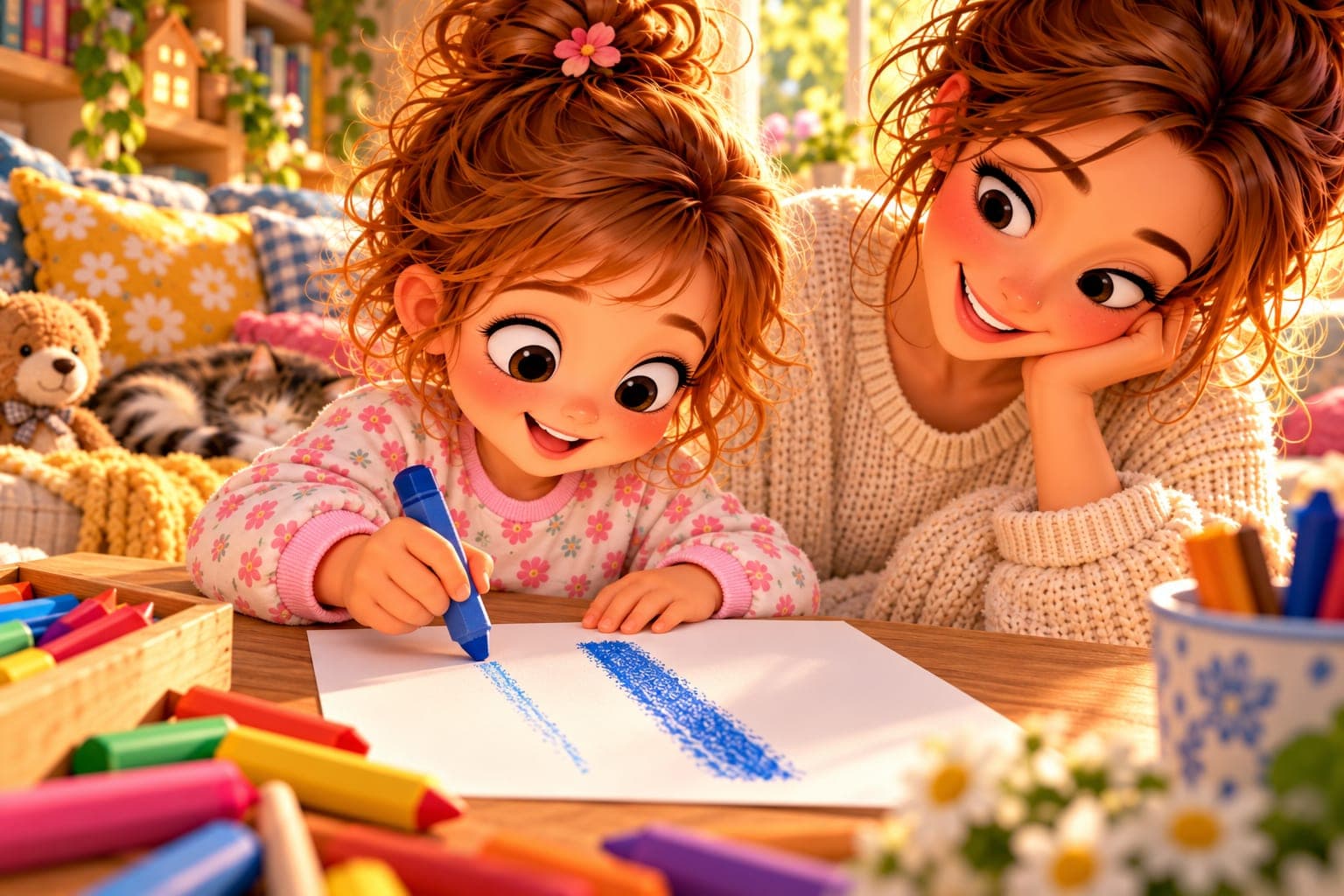
If your child presses very hard, offer a softer crayon, such as a wax crayon, and show two marks: one light and one dark. You can play at making a “quiet” and “loud” color. This practises pressure changes without turning technique into a formal lesson.
Should a 4-year-old color without going outside the lines?
Do not expect flawless control of the outline. At age 4, precision is still developing, and coloring should be an opportunity to practise movement rather than a test of accuracy.
Instead of saying “you went outside again,” comment on the strategy: “You slowed down near the edge there” or “That small area was tricky; try shorter strokes.” This tells your child what they can do with their hand.
You can also alternate coloring with other pre-writing movements. A simple gentle-curve tracing pattern for a 4-year-old lets your child practise guiding the hand without having to fill whole areas.
How can you talk with your child while they color?
A coloring page can lead naturally into conversation, counting and storytelling. You do not need a series of test-like questions. A few short comments linked to what your child is doing are enough.
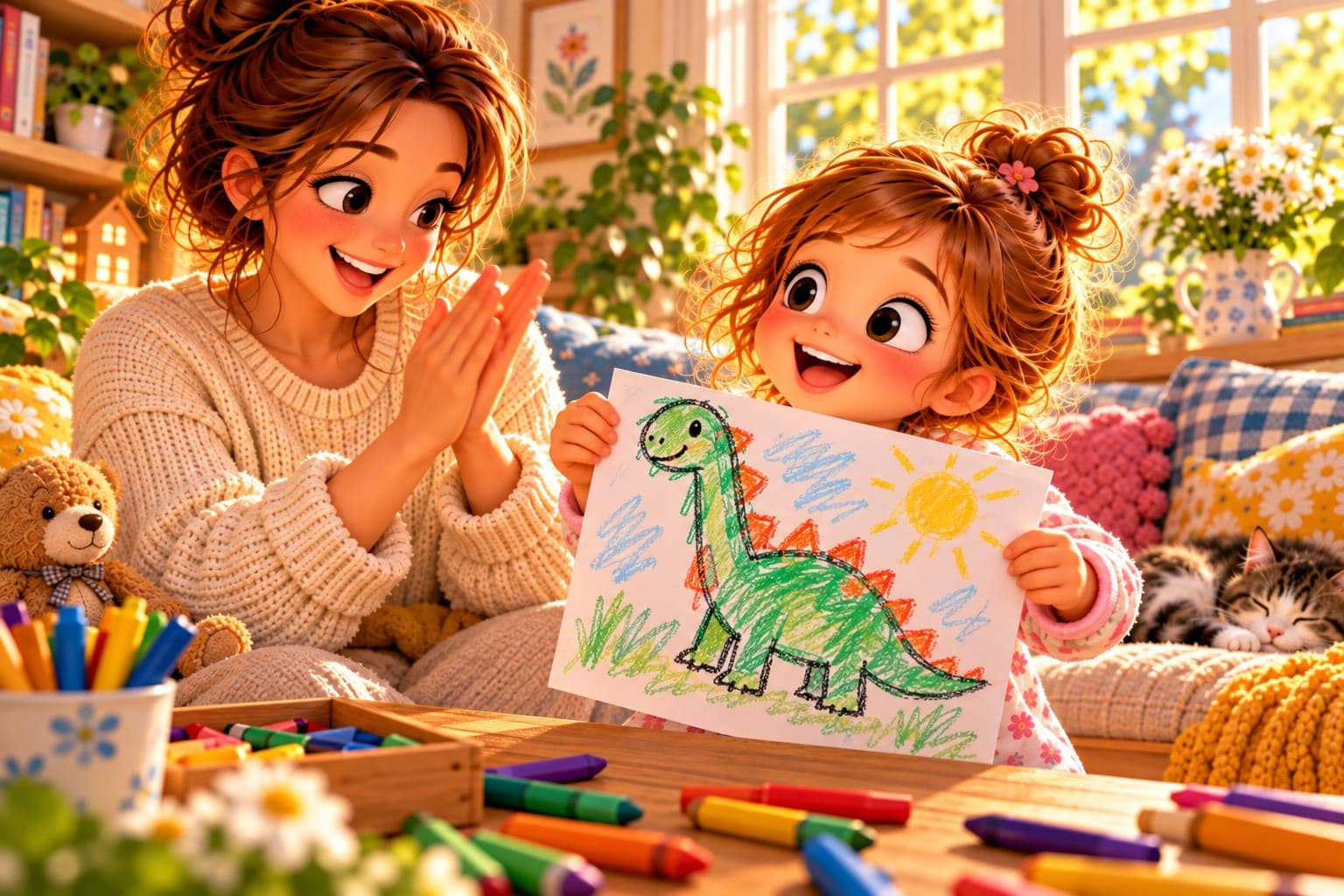
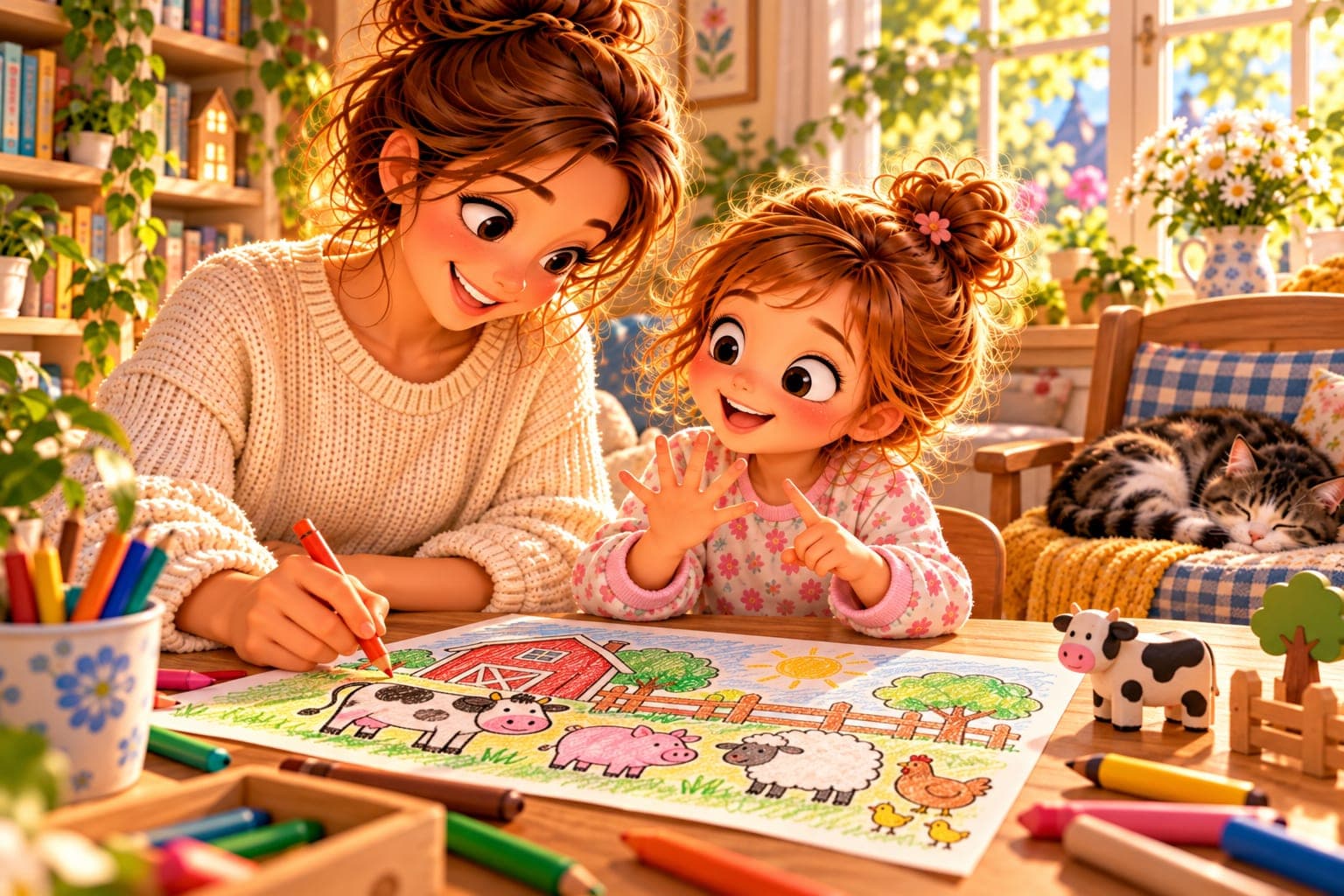
With a farm picture, ask: “How many animals can you see?”, “Which one is biggest?”, “What might happen next?”. With a car, name parts of the vehicle and make up a route. With a dinosaur, let your child tell you where it lives and what it is looking for.
Do not correct color choices. A purple cow or a green sun can be the beginning of a good story. If you want other activities based on conversation and action, see educational activities for 4-year-olds.
What might a 4-week coloring plan look like?
The plan is there to help you observe progress, not impose a pace. Two or three short sessions a week are enough when your child wants to color.
Week 1: choose large single objects. Watch the grip, pressure and whether your child prefers large movements or short strokes.
Week 2: add a second or third element while keeping the areas large. Talk about colors and count the objects.
Week 3: choose a simple scene with a background, such as a car on a road or an animal by a fence. See whether your child shifts attention between the main object and the background independently.
Week 4: offer a few smaller areas within a familiar theme. If frustration appears, go back to the level from week 2 or 3 and try again later.
What mistakes should parents avoid?
- Choosing a picture “for later.” Lots of tiny areas do not make a better exercise if your child gives up quickly.
- Correcting every mark outside the line. This shifts attention from play to evaluation.
- Coloring for the child. You can demonstrate a movement on a separate sheet, but leave their picture as their own work.
- Criticising the grip with every stroke. It is better to watch the pattern over time and offer more comfortable tools.
- Comparing with other children. What matters is change compared with the same child’s earlier attempts.
When should you discuss drawing or grip difficulties with someone?
One day without wanting to color is not a reason for concern. However, it is worth talking to an early-years teacher or paediatrician if your child persistently avoids drawing and other hand activities, tires very quickly during them, or clearly struggles to use a crayon.
A consultation does not automatically mean a diagnosis. It helps combine observations from home and early-years settings and decide whether further assessment is needed. Early-years programmes treat physical, cognitive, emotional and social development as connected areas supported through everyday activity.
Sources
- Minister Edukacji, Rozporządzenie z 11 marca 2026 r. w sprawie podstawy programowej wychowania przedszkolnego i kształcenia ogólnego, Dz.U. 2026 poz. 378, 2026.
- American Academy of Pediatrics, Hand and Finger Skills of Your Preschooler, updated 2022.