
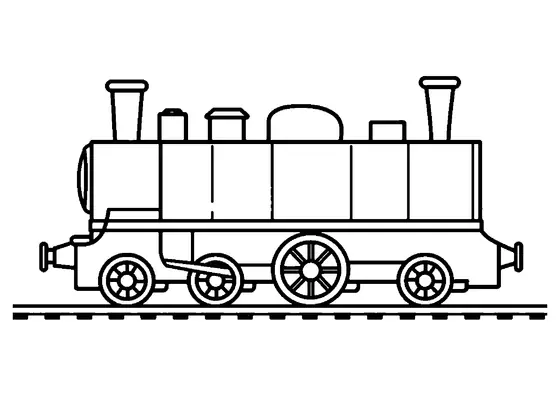
Steam Train with Big Smokestack
A classic steam locomotive featuring a prominent smokestack and heavy steel wheels showcases historic railway technology.

A4 format (landscape), black outlines on a white background · for home and classroom use
All coloring pages: Train Coloring Pages
Similar coloring pages: Train Coloring Pages



What else can you print? Free, no account needed
Custom Name Coloring Pages
Enter your child's name to generate a custom coloring page featuring large outline letters to color and decorate.
Open generator →Connect the Dots Generator
Eight connect-the-dots pictures across three difficulty levels. Features faint outline guides for younger children and dots only for older kids.
Open generator →Printables
Worksheets, tracing lines, mazes and dot-to-dots in A4.
Browse printables →
Historic Steam Locomotives
Steam engines revolutionized transportation by converting water and burning fuel into powerful mechanical movement. The heavy boiler holds water heated by coal or wood fires, producing high-pressure steam that drives large drive wheels through connected metal rods. The tall smokestack at the front vents exhaust smoke and steam high into the air as the train moves down the tracks.
How Steam Engines Created Energy
Early railway locomotives relied on large fireboxes located behind the boiler to burn fuel continuously during trips. Water surrounding the internal fire tubes boiled rapidly, building up steam pressure inside the sealed cylindrical boiler shell. Engineers opened steam valves to direct pressurized steam into heavy pistons, driving the locomotive forward across long distances.
Natural Colors of a Steam Engine
- Engine body and boiler: glossy black, dark green, or deep blue steel plates
- Smokestack: dark cast iron gray or soot-covered black metal
- Drive wheels and connecting rods: bright silver steel or painted crimson red
- Cab interior and trim: polished brass yellow or burnished bronze highlights