
Cracked Ice World
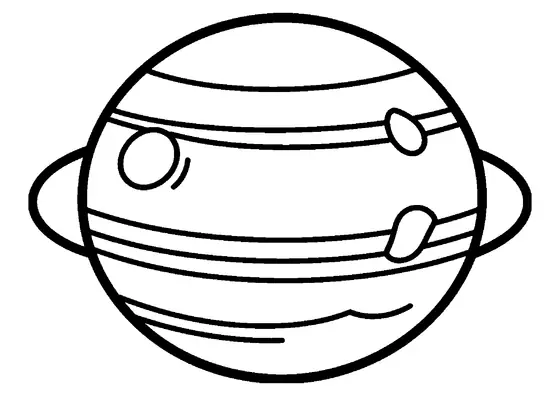
A frozen planetary sphere features a prominent polar ice cap, expansive surface ridges, and a deep, wide fissure.

A4 format (landscape), black outlines on a white background · for home and classroom use
All coloring pages: Planet and Solar System Coloring Pages
Similar coloring pages: Planet and Solar System Coloring Pages


What else can you print? Free, no account needed
Custom Name Coloring Pages
Enter your child's name to generate a custom coloring page featuring large outline letters to color and decorate.
Open generator →Connect the Dots Generator
Eight connect-the-dots pictures across three difficulty levels. Features faint outline guides for younger children and dots only for older kids.
Open generator →Printables
Worksheets, tracing lines, mazes and dot-to-dots in A4.
Browse printables →
A Frozen World Shaped by Extreme Cold
This cosmic scene depicts a spherical icy planet floating in space. Its frozen surface features a broad polar ice cap at the top, accompanied by raised rocky ridges and a wide fissure cutting across its icy landscape.
Mysterious Oceans Beneath Ice Shells
Icy worlds in the outer solar system often conceal vast liquid oceans beneath their thick outer crusts of frozen ice. Tidal forces generated by neighboring planets stretch and flex these frozen worlds, causing the thick ice shells to crack and form long ridges on the surface. Warm water from deep interior vents can spew through surface cracks, freezing instantly upon contact with space.
Real Colors of an Icy Planet
- Polar Ice Cap: Bright ice white, pale frosted blue, or crystalline cyan
- Surface Ridges: Soft slate gray, muted teal blue, or light steel gray
- Surface Fractures: Deep navy blue or dark cobalt shadow