
Rocket at the Mountain Observatory
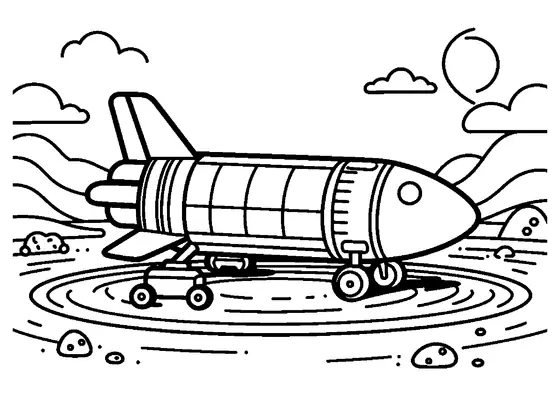
A research rocket stands prepared for a science mission next to an astronomical observatory perched on a high peak.

A4 format (landscape), black outlines on a white background · for home and classroom use
All coloring pages: Space and Rocket Coloring Pages
Similar coloring pages: Space and Rocket Coloring Pages




What else can you print? Free, no account needed
Custom Name Coloring Pages
Enter your child's name to generate a custom coloring page featuring large outline letters to color and decorate.
Open generator →Connect the Dots Generator
Eight connect-the-dots pictures across three difficulty levels. Features faint outline guides for younger children and dots only for older kids.
Open generator →Printables
Worksheets, tracing lines, mazes and dot-to-dots in A4.
Browse printables →
High-Altitude Research Rocket at a Mountain Station
An astronomical facility on an elevated summit shares the landscape with a scientific rocket waiting on its pad. Rocky peaks, drifting clouds, and mountain ridges form the surrounding environment. Building research stations high in the mountains gives scientists clearer access to the sky and nearby air currents.
Why Observatories Are Built on Mountains
Astronomical observatories sit atop high mountains to get above atmospheric haze and light pollution from cities. Thin air at high elevations contains less water vapor, allowing telescopes to capture sharper images of distant stars. Mountain tops also offer stable weather conditions suitable for continuous night sky monitoring.
Natural Shades of Mountain Observatories
- observatory dome: white or silver paint to reflect daytime heat
- rocket body: clean white alloy with yellow or red mission stripes
- mountain rocks: dark granite gray, brown, or weathered beige
- sky and clouds: sky blue atmospheric background with white clouds