
Rocket by a Spiral Crater
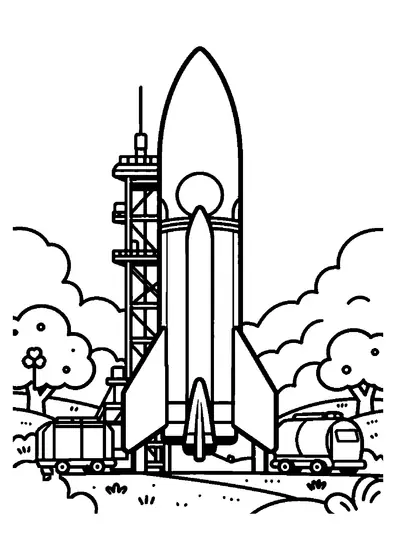
A scientific launch vehicle stands near an exploration rover and access ramp beside a winding impact crater on a distant world.

A4 format (landscape), black outlines on a white background · for home and classroom use
All coloring pages: Space and Rocket Coloring Pages
Similar coloring pages: Space and Rocket Coloring Pages

What else can you print? Free, no account needed
Custom Name Coloring Pages
Enter your child's name to generate a custom coloring page featuring large outline letters to color and decorate.
Open generator →Connect the Dots Generator
Eight connect-the-dots pictures across three difficulty levels. Features faint outline guides for younger children and dots only for older kids.
Open generator →Printables
Worksheets, tracing lines, mazes and dot-to-dots in A4.
Browse printables →
Scientific Research Beside a Spiral Crater
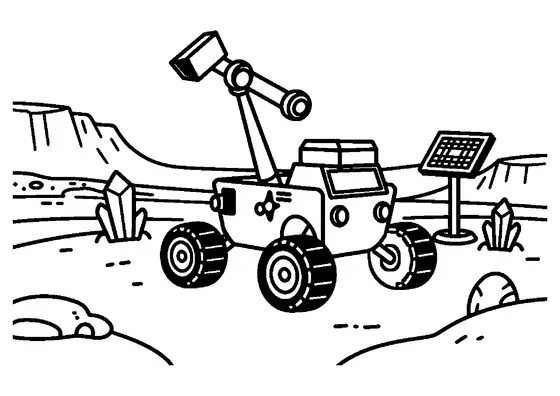
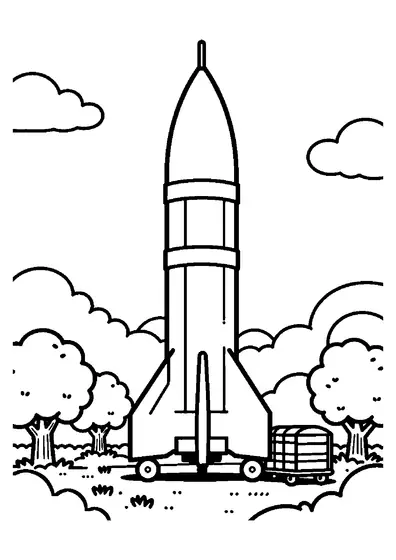
A wide planetary landing craft rests on solid ground near a distinct spiral crater. A multi-wheeled exploration vehicle and a sturdy ramp sit close to the landing area, allowing equipment to be moved safely along the edge of the deep geological formation. The scene presents a specialized planetary research site focused on geological survey.
Fascinating Facts About Impact Craters
Impact craters form when meteorites strike planetary surfaces at immense speeds, creating circular depressions with central peaks or layered terraces. Swirling or spiral patterns inside crater walls often reveal layers of ancient rock strata carved out by intense force and erosion. Studying crater edges helps planetary geologists uncover mineral deposits buried deep beneath the surface.
Authentic Colors of Spacecraft and Craters
- Rocket body: off-white or polished aluminum with high-contrast orange markings
- Planetary rover: metallic silver with black rubber tires and solar panel glass
- Equipment ramp: industrial gray steel or yellow safety coating
- Crater walls: dusty charcoal, dark slate, or ochre rock layers
- Surface soil: fine ash gray or reddish dust