
Dragon at Ancient Amphitheater Ruins
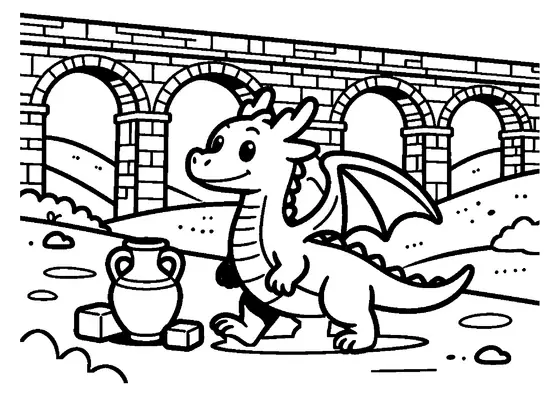
A slender dragon wanders through the stone terraces and arched passageways of an ancient amphitheater.

A4 format (landscape), black outlines on a white background · for home and classroom use
All coloring pages: Dragon Coloring Pages
Similar coloring pages: Dragon Coloring Pages


What else can you print? Free, no account needed
Custom Name Coloring Pages
Enter your child's name to generate a custom coloring page featuring large outline letters to color and decorate.
Open generator →Connect the Dots Generator
Eight connect-the-dots pictures across three difficulty levels. Features faint outline guides for younger children and dots only for older kids.
Open generator →Printables
Worksheets, tracing lines, mazes and dot-to-dots in A4.
Browse printables →
Slender Dragon Exploring Historic Ruins
A long dragon stands among the stone terraces of a historic open-air amphitheater. Decorative stone vases sit along cracked stone paving, surrounded by tiered seating steps and grand arched passageways cut into the ancient structure.
Architecture of Ancient Amphitheaters
Ancient amphitheaters were built in a circular or oval shape with tiered seating banks surrounding a central performance arena. Architects designed these outdoor structures with remarkable acoustics, allowing voices from the lower stage to carry clearly to the uppermost rows. Massive stone arcades supported the heavy terraced seating and allowed thousands of spectators to exit quickly.
Colors of Classical Stone Ruins
- Dragon skin: deep teal, indigo blue, or warm bronze
- Ancient stone terraces: warm beige, sandstone buff, or light gray
- Decorative stone vase: aged terracotta or white marble
- Arched passageways: deep shadow gray or weathered brown
- Cracked stone paving: muted sand or dusty tan