
Dragon by a Riverside Mill
A friendly dragon rests beside a heavy millstone and grain sacks near a quiet riverside watermill in foggy spring weather.

A4 format (landscape), black outlines on a white background · for home and classroom use
All coloring pages: Dragon Coloring Pages
Similar coloring pages: Dragon Coloring Pages




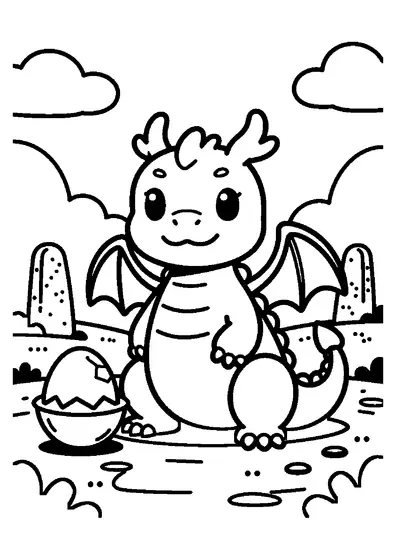
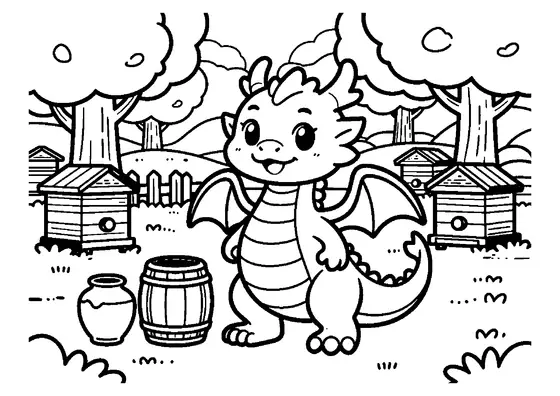
What else can you print? Free, no account needed
Custom Name Coloring Pages
Enter your child's name to generate a custom coloring page featuring large outline letters to color and decorate.
Open generator →Connect the Dots Generator
Eight connect-the-dots pictures across three difficulty levels. Features faint outline guides for younger children and dots only for older kids.
Open generator →Printables
Worksheets, tracing lines, mazes and dot-to-dots in A4.
Browse printables →
Dragons and Traditional Watermills
Mythical dragons in folklore are often depicted as guardians of countryside landmarks, including peaceful riverside mills. Historical watermills relied on flowing river currents to turn large wooden waterwheels, which drove heavy circular millstones inside to grind harvested grain into flour. A gentle dragon visiting a riverside mill creates an enchanting fantasy scene set amidst misty rural landscapes.
The Mechanics of Historic Watermills
Watermills have been utilized for over two thousand years to harness hydraulic power for milling grain. Positioned along riverbanks, the wheel catches moving water to spin an axle connected to internal gears. Heavy granite millstones crush wheat or corn into fine flour, which millers stored in durable burlap grain sacks stacked nearby ready for transport.
Realistic Colors of Watermill Materials and Dragons
- Watermill timber and waterwheel: Weathered mossy brown, dark oak wood, and damp gray timber
- Millstone: Cool granite gray with light flecks of stone texture
- Sack of grain: Natural beige burlap, tan canvas, or light cream fabric
- Dragon scales: Emerald green, deep sapphire blue, or warm crimson red
- Misty river atmosphere: Pale bluish-gray water, soft morning mist, and fresh spring greenery