
Dragon in a Castle Tournament Arena
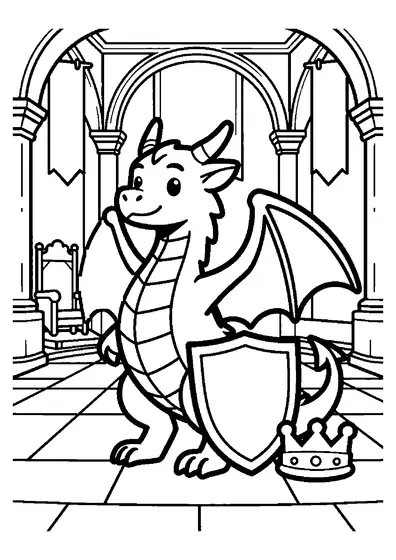
A majestic dragon poses near a large shield inside a quiet castle arena prepared for historic tournaments.

A4 format (landscape), black outlines on a white background · for home and classroom use
All coloring pages: Dragon Coloring Pages
Similar coloring pages: Dragon Coloring Pages



What else can you print? Free, no account needed
Custom Name Coloring Pages
Enter your child's name to generate a custom coloring page featuring large outline letters to color and decorate.
Open generator →Connect the Dots Generator
Eight connect-the-dots pictures across three difficulty levels. Features faint outline guides for younger children and dots only for older kids.
Open generator →Printables
Worksheets, tracing lines, mazes and dot-to-dots in A4.
Browse printables →
Heraldic Dragon in a Medieval Arena
A calm dragon stands on the sandy floor of a castle tournament arena alongside a large heraldic shield. Stone spectator stands, an arched wooden gate, and a medieval tent form the backdrop of the empty field, set within historic fortress walls.
Medieval Tournaments and Heraldry
In medieval times, knights gathered in open-air arenas called lists to display horsemanship and martial skill during grand festivals. Heraldic symbols painted on shields helped spectators identify participants from afar, as armors completely obscured faces. Colorful tournament tents housed equipment and served as private quarters for competitors between events.
Colors of Medieval Arenas and Shields
- Dragon hide: burgundy red, copper brown, or metallic bronze
- Tournament shield: royal blue with golden heraldic emblems
- Arena sand: warm beige or muted yellow earth
- Pavilion tent: crimson red and white stripes
- Castle walls and stands: ash gray or weathered limestone