
Baby Dragon in an Egg Chamber
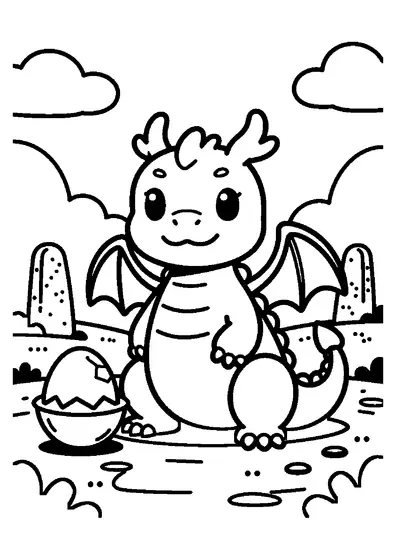
A cheerful young dragon rests beside an unhatched egg inside a cozy underground stone cave.

A4 format (portrait), black outlines on a white background · for home and classroom use
All coloring pages: Dragon Coloring Pages
Similar coloring pages: Dragon Coloring Pages


What else can you print? Free, no account needed
Custom Name Coloring Pages
Enter your child's name to generate a custom coloring page featuring large outline letters to color and decorate.
Open generator →Connect the Dots Generator
Eight connect-the-dots pictures across three difficulty levels. Features faint outline guides for younger children and dots only for older kids.
Open generator →Printables
Worksheets, tracing lines, mazes and dot-to-dots in A4.
Browse printables →
Young Dragon in the Hatching Cave
Inside a quiet rocky chamber, a smiling baby dragon keeps watch beside a large spotted egg. The sheltered stone cave provides a warm, safe lair for the newly hatched creature as it explores its sheltered surroundings.
Reptile Eggs and Underground Caves
Many modern reptile species lay eggs in hidden subterranean nests where temperatures and moisture levels remain stable throughout incubation. Underground caverns stay at consistent temperatures year-round, protecting delicate eggs from sudden weather changes and surface predators. Hard or leathery eggshells shield developing embryos while allowing essential gases to pass through.
Palette of Caverns and Hatchlings
- Baby dragon: mint green, sunny yellow, or coral pink
- Unhatched dragon egg: speckled cream, pastel blue, or warm ochre
- Cavern rock walls: dark charcoal, granite gray, or earthy brown
- Cave floor stones: slate gray or warm terracotta