
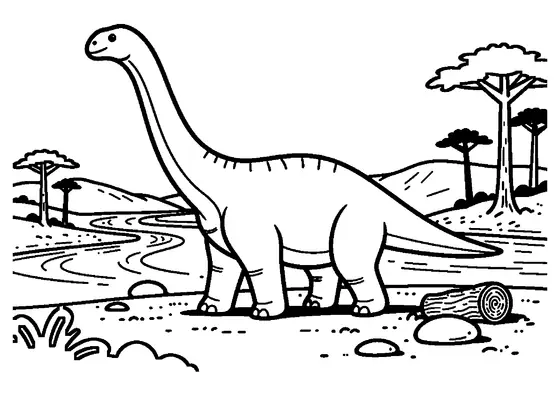
Diplodocus in a Wet Prehistoric River Valley
A long-necked Diplodocus feeds among plants in a wet river valley from the prehistoric world.

A4 format (landscape), black outlines on a white background · for home and classroom use
All coloring pages: Dinosaur Coloring Pages
Similar coloring pages: Dinosaur Coloring Pages


What else can you print? Free, no account needed
Custom Name Coloring Pages
Enter your child's name to generate a custom coloring page featuring large outline letters to color and decorate.
Open generator →Connect the Dots Generator
Eight connect-the-dots pictures across three difficulty levels. Features faint outline guides for younger children and dots only for older kids.
Open generator →Printables
Worksheets, tracing lines, mazes and dot-to-dots in A4.
Browse printables →
A Diplodocus Feeding in a River Valley
The scene centers on a Diplodocus with an exceptionally long neck and tail as it grazes on vegetation in a damp river valley. The dinosaur and the surrounding plants form a peaceful view of a prehistoric habitat shaped by water.
Surprising Facts About Diplodocus and River Habitats
Diplodocus was a plant-eating sauropod whose long neck helped it reach vegetation across a broad area without moving its heavy body very far. Rivers and seasonal flooding can create fertile valleys, so waterways would have influenced where plants grew and where large herbivores could find food. Its long tail may also have helped with balance as the animal walked.
Colors Found in Nature
- Diplodocus skin: its exact color is unknown, but muted greens, browns, and grays are plausible choices for a large land animal
- Neck and back: a darker shade could represent natural patterning, although no confirmed pattern is known
- Underside: tan, pale gray, or another lighter earth tone
- River water: blue-gray, green, brown, or clear with colors reflected from its surroundings
- Valley plants: varied greens, with brown stems and older leaves