
Tyrannosaurus Rex in a Dense Fern Forest
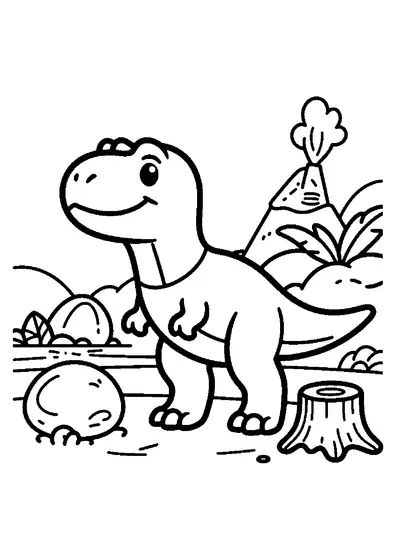
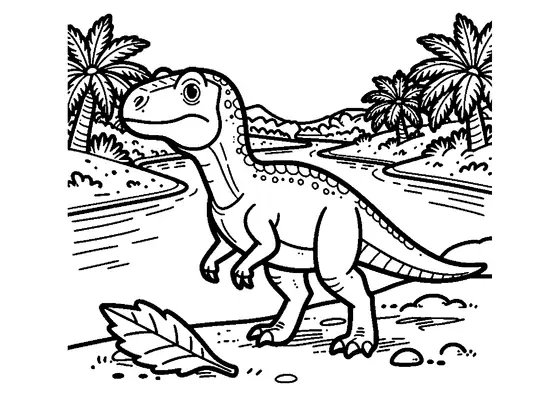
A powerful Tyrannosaurus rex moves through a dense prehistoric fern forest with its huge mouth and scaly back visible.

A4 format (portrait), black outlines on a white background · for home and classroom use
All coloring pages: Dinosaur Coloring Pages
Similar coloring pages: Dinosaur Coloring Pages


What else can you print? Free, no account needed
Custom Name Coloring Pages
Enter your child's name to generate a custom coloring page featuring large outline letters to color and decorate.
Open generator →Connect the Dots Generator
Eight connect-the-dots pictures across three difficulty levels. Features faint outline guides for younger children and dots only for older kids.
Open generator →Printables
Worksheets, tracing lines, mazes and dot-to-dots in A4.
Browse printables →
Tyrannosaurus rex in the fern forest
The picture shows Tyrannosaurus rex walking through thick prehistoric vegetation. Its enormous head, large mouth, and textured back identify one of the best-known meat-eating dinosaurs. Ferns surround the animal and establish the forest setting described for this ancient scene.
Forest life in the age of Tyrannosaurus rex
Flowering plants already existed when Tyrannosaurus rex lived, while ferns and conifers also formed important parts of many plant communities. Ferns reproduce with spores rather than flowers or seeds. A dense forest could provide shelter for smaller animals, even though a huge predator would need room to travel between plants.
Natural colors for Tyrannosaurus rex
- Skin: its complete color pattern is unknown; brown, olive, rust, or dark gray are reasonable natural possibilities
- Back: darker earthy tones could provide believable contrast, although fossil evidence does not confirm the pattern
- Mouth: soft tissues in living animals are commonly pink, muted red, or purplish
- Teeth: ivory or pale cream
- Ferns: usually green, with older or dried fronds turning yellow, tan, or brown