
Spinosaurus in a Shallow Prehistoric Bay
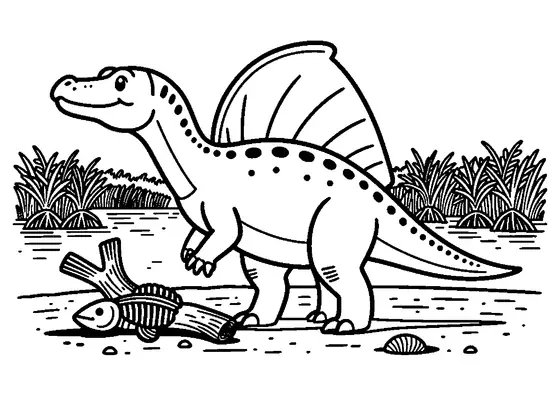
A huge Spinosaurus with its distinctive back sail moves through the sandy shallows of a prehistoric bay.

A4 format (landscape), black outlines on a white background · for home and classroom use
All coloring pages: Dinosaur Coloring Pages
Similar coloring pages: Dinosaur Coloring Pages



What else can you print? Free, no account needed
Custom Name Coloring Pages
Enter your child's name to generate a custom coloring page featuring large outline letters to color and decorate.
Open generator →Connect the Dots Generator
Eight connect-the-dots pictures across three difficulty levels. Features faint outline guides for younger children and dots only for older kids.
Open generator →Printables
Worksheets, tracing lines, mazes and dot-to-dots in A4.
Browse printables →
Spinosaurus in coastal shallows
The scene places Spinosaurus in shallow water near a sandy shore. Its elongated jaws and tall sail dominate its appearance, while the bay reflects the close connection this dinosaur had with aquatic environments. Fossil evidence indicates that Spinosaurus was more specialized for life around water than most other large predatory dinosaurs.
A predator linked to ancient waterways
Spinosaurus had dense bones and a broad, paddle-like tail that may have helped it move in water. Its long snout and conical teeth were well suited to gripping slippery prey. Researchers continue to debate exactly how efficiently it swam and how much time it spent submerged.
Natural colors of Spinosaurus and the bay
- Spinosaurus skin: its true color is unknown; earthy, dark, or patterned coloration is possible
- Back sail: no fossil confirms its color, and it may have carried contrasting display markings
- Teeth: likely ivory, cream, or pale tan when visible above the gums
- Sandy shallows: commonly beige or golden brown, with darker areas where the sand is wet
- Bay water: may appear blue, green, gray, or cloudy brown depending on depth, sediment, and reflected light