
Carnotaurus Viewed from the Front
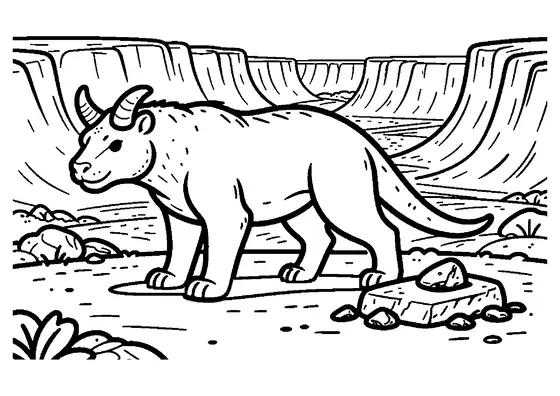
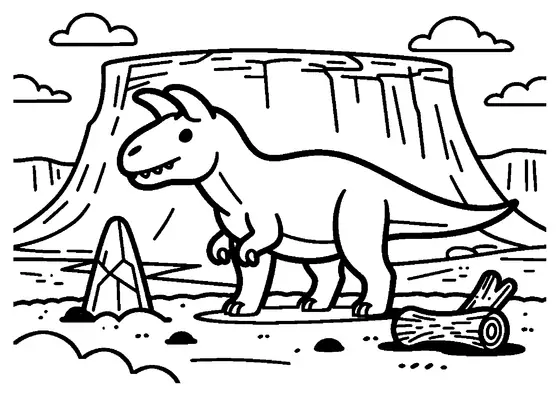
A friendly, smiling Carnotaurus faces forward, showcasing its distinctive bull-like horns and compact front limbs.

A4 format (portrait), black outlines on a white background · for home and classroom use
All coloring pages: Predatory Dinosaur Coloring Pages
Similar coloring pages: Predatory Dinosaur Coloring Pages




What else can you print? Free, no account needed
Custom Name Coloring Pages
Enter your child's name to generate a custom coloring page featuring large outline letters to color and decorate.
Open generator →Connect the Dots Generator
Eight connect-the-dots pictures across three difficulty levels. Features faint outline guides for younger children and dots only for older kids.
Open generator →Printables
Worksheets, tracing lines, mazes and dot-to-dots in A4.
Browse printables →
A Smiling Carnotaurus Facing Forward
This drawing presents a smiling Carnotaurus positioned directly in a front view. Two thick, pointed horns project outward right above its eyes on a short, deep head. Its tiny, vestigial front arms rest against the sides of a broad chest while the dinosaur stands on two strong legs.
Distinctive Features of the Meat-Eating Bull
Carnotaurus derives its name from Latin words meaning flesh-eating bull because of the prominent pair of horns on its forehead. Fossils found in South America preserved detailed skin impressions showing that its body was covered in small scales and rows of larger bumpy osteoderms. Its legs were exceptionally long and muscular, making Carnotaurus one of the fastest running large predatory dinosaurs.
Natural Pigments of Horned Theropods
- Scaly hide: Earthy red-brown, terracotta, or dark gray
- Bumpy skin osteoderms: Darker brown or near-black studs along the spine and flanks
- Forehead horns: Weathered bone white, pale tan, or dark slate
- Eyes: Dark brown or amber with pale surrounding skin