
Carnotaurus Investigates a Mud Bubble
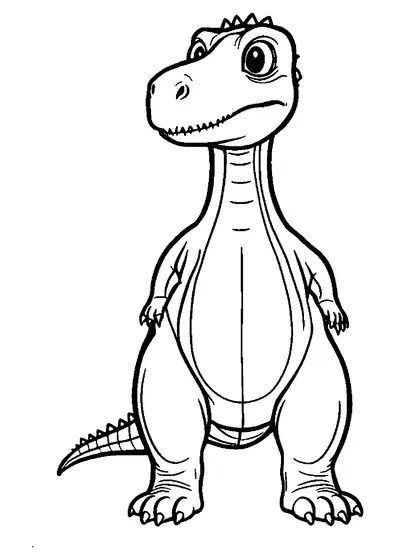
A Carnotaurus stands in a muddy pool and looks up at a large bubble rising above the water.

A4 format (portrait), black outlines on a white background · for home and classroom use
All coloring pages: Predatory Dinosaur Coloring Pages
Similar coloring pages: Predatory Dinosaur Coloring Pages



What else can you print? Free, no account needed
Custom Name Coloring Pages
Enter your child's name to generate a custom coloring page featuring large outline letters to color and decorate.
Open generator →Connect the Dots Generator
Eight connect-the-dots pictures across three difficulty levels. Features faint outline guides for younger children and dots only for older kids.
Open generator →Printables
Worksheets, tracing lines, mazes and dot-to-dots in A4.
Browse printables →
What the Carnotaurus and Mud Bubble Scene Shows
The predatory Carnotaurus is planted in the shallow pool with its head raised toward the floating mud bubble. Rippling water surrounds its feet, tufts of grass grow near the lower sides of the scene, and steep mountain peaks rise in the distance. The lifted gaze makes the unusual bubble the focus of the encounter.
Curious Facts About Mud Bubbles
Bubbles can form in muddy water when gas trapped below the surface escapes through wet sediment. In modern ponds and marshy ground, some gas is produced as microorganisms break down organic matter without much oxygen. A bubble may briefly keep its rounded shape when the mud is thick enough to hold a thin film around the gas.
Natural Colors for the Dinosaur and Landscape
- Carnotaurus body: rusty brown, sandy tan, muted green, or dark gray
- Horns above the eyes: cream, tan, or weathered brown
- Eyes: amber, dark brown, or nearly black
- Mud and bubble: clay brown, reddish brown, or deep gray-brown
- Mountains and grass: stone gray or brown peaks with green, ocher, or straw-colored grass