
Parasaurolophus by a Puddle
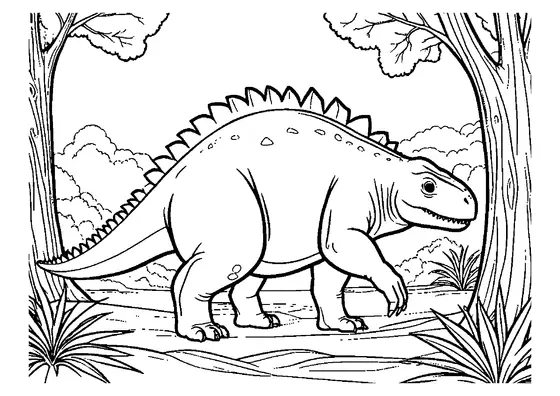
A Parasaurolophus stands beside a reflective puddle, with grass and distant hills surrounding the water.

A4 format (portrait), black outlines on a white background · for home and classroom use
All coloring pages: Herbivorous Dinosaur Coloring Pages
Similar coloring pages: Herbivorous Dinosaur Coloring Pages




What else can you print? Free, no account needed
Custom Name Coloring Pages
Enter your child's name to generate a custom coloring page featuring large outline letters to color and decorate.
Open generator →Connect the Dots Generator
Eight connect-the-dots pictures across three difficulty levels. Features faint outline guides for younger children and dots only for older kids.
Open generator →Printables
Worksheets, tracing lines, mazes and dot-to-dots in A4.
Browse printables →
Parasaurolophus by a Puddle
The dinosaur turns toward the viewer while its reflection appears in the calm surface below. Tufts of grass border the watery area, and the shapes of hills rise across the background. Its most recognizable feature is the long crest extending backward from the top of its head.
A Crest with Hidden Passages
The crest of Parasaurolophus contained long internal air passages connected to its respiratory system. Researchers think air moving through these passages could have produced deep sounds, possibly helping individuals communicate across a habitat. The crest may also have served as a visual signal that helped members of the species recognize one another.
Realistic Colors for Parasaurolophus and the Landscape
- Parasaurolophus body: no exact coloration is known; rust brown, muted green, or sandy tan are reasonable natural palettes
- Head crest: a deeper red-brown or contrasting ocher for display
- Underside: cream, pale tan, or light gray
- Grass and hills: layered greens, dry gold, or earthy brown
- Puddle and reflection: blue-gray, brown-green, or a muted version of the surrounding landscape