
Parasaurolophus Among Giant Ferns
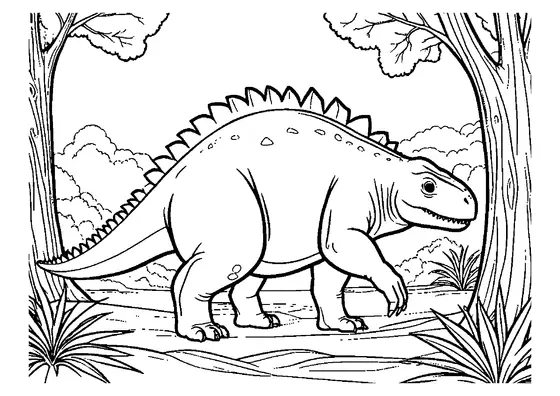
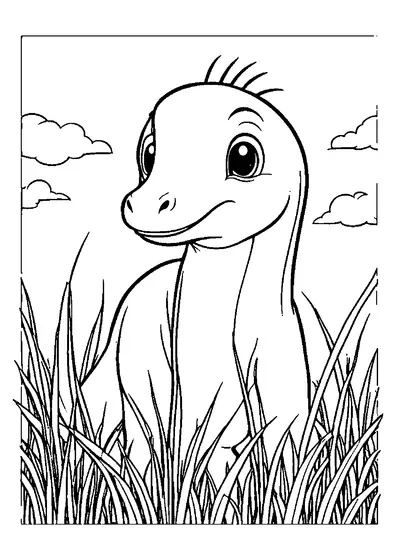
A calm Parasaurolophus stands on four legs in a clearing bordered by broad fern leaves.

A4 format (portrait), black outlines on a white background · for home and classroom use
All coloring pages: Herbivorous Dinosaur Coloring Pages
Similar coloring pages: Herbivorous Dinosaur Coloring Pages




What else can you print? Free, no account needed
Custom Name Coloring Pages
Enter your child's name to generate a custom coloring page featuring large outline letters to color and decorate.
Open generator →Connect the Dots Generator
Eight connect-the-dots pictures across three difficulty levels. Features faint outline guides for younger children and dots only for older kids.
Open generator →Printables
Worksheets, tracing lines, mazes and dot-to-dots in A4.
Browse printables →
Parasaurolophus Among the Ferns
The herbivorous dinosaur appears in a three-quarter view, surrounded by large ferns along the sides and foreground. Its most recognizable feature is the long crest that curves backward over its body. The open upper background keeps attention on the animal and the prehistoric plants around it.
Life Around Prehistoric Ferns
Ferns existed long before flowering plants became widespread and reproduced using spores rather than seeds. Parasaurolophus lived in environments with rivers, floodplains, and abundant vegetation. Its hollow crest may have helped members of the species produce resonant calls across such landscapes.
Possible Natural Colors
- Parasaurolophus skin: its exact color is unknown; earthy brown, olive, tan, or rust tones are plausible
- Backward-curving crest: unknown, though it may have displayed contrasting colors used for recognition
- Underside: a lighter tan or muted cream would match patterns seen in many living animals
- Eyes: the original shade is unknown; dark brown or black is a natural interpretation
- Fern fronds: commonly green, ranging from pale fresh growth to deep forest green