
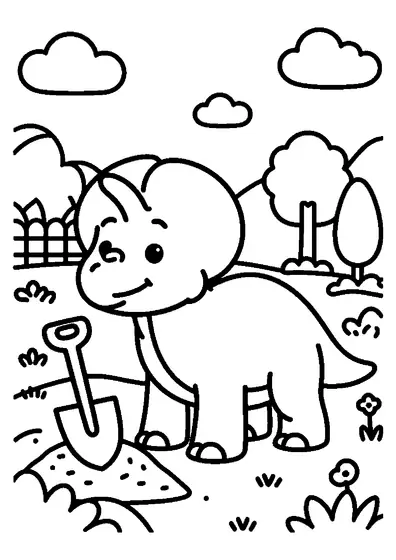
Medusaceratops by a Wicker Chair
A ceratopsian dinosaur stands near outdoor seating surrounded by a garden area.

A4 format (portrait), black outlines on a white background · for home and classroom use
All coloring pages: Herbivorous Dinosaur Coloring Pages
Similar coloring pages: Herbivorous Dinosaur Coloring Pages




What else can you print? Free, no account needed
Custom Name Coloring Pages
Enter your child's name to generate a custom coloring page featuring large outline letters to color and decorate.
Open generator →Connect the Dots Generator
Eight connect-the-dots pictures across three difficulty levels. Features faint outline guides for younger children and dots only for older kids.
Open generator →Printables
Worksheets, tracing lines, mazes and dot-to-dots in A4.
Browse printables →
Medusaceratops in a Garden Setting
This scene depicts a Medusaceratops positioned beside a large wicker chair. The surrounding space includes a porch section that opens out toward a garden background.
Facts About Medusaceratops and Prehistoric Environments
Medusaceratops was a plant-eating dinosaur known for the large hooks along its neck frill. Fossils of ceratopsians show that these animals lived near lush coastal environments rich in ferns and ancient flowering plants. Wicker furniture craftsmanship mimics natural plant weaving, drawing on materials similar to early seed plants that shared landscapes with late Cretaceous reptiles.
Natural Colors of the Motifs
- Medusaceratops scales: earthy shades of brown or olive green
- Dinosaur neck frill: muted tones of ochre with darker brown accents
- Wicker chair frame: warm beige, tan, or natural wood tones
- Garden vegetation: varied shades of dark green, leaf green, and moss