
Lusotitan with a Basket of Branches
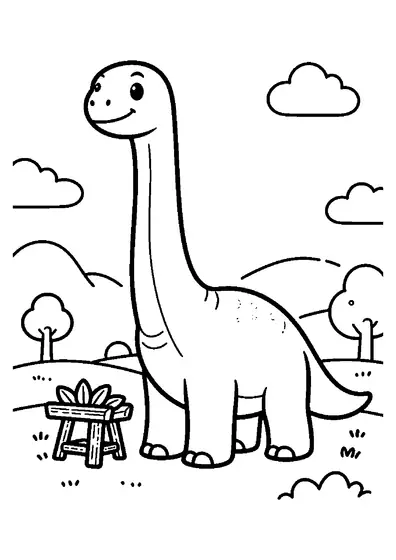
A calm Lusotitan stands beside a large basket packed with leafy branches in a sunny park clearing.

A4 format (landscape), black outlines on a white background · for home and classroom use
All coloring pages: Herbivorous Dinosaur Coloring Pages
Similar coloring pages: Herbivorous Dinosaur Coloring Pages



What else can you print? Free, no account needed
Custom Name Coloring Pages
Enter your child's name to generate a custom coloring page featuring large outline letters to color and decorate.
Open generator →Connect the Dots Generator
Eight connect-the-dots pictures across three difficulty levels. Features faint outline guides for younger children and dots only for older kids.
Open generator →Printables
Worksheets, tracing lines, mazes and dot-to-dots in A4.
Browse printables →
Lusotitan in a Park Clearing
The full body of a peaceful Lusotitan is shown beside a large basket filled with fresh leafy branches. An open park clearing forms the serene background of the scene.
Facts About Lusotitan and Sauropod Diets
Lusotitan was a massive long-necked sauropod discovered in Portugal that lived during the Late Jurassic period. Sauropods had high vertical reach, allowing them to strip leafy foliage from high tree canopy branches that other herbivores could not reach. Storing harvested tree branches in large baskets reflects historic methods of collecting forage for giant plant-eating animals.
Natural Colors of Lusotitan and Park Foliage
- Lusotitan hide: Deep green, grayish-brown, or earth-tone tan
- Leafy branches: Bright leaf green, emerald, or lime green
- Woven foliage basket: Natural reed brown, hazel wood tan, or dark straw
- Park clearing grass: Meadow green or sun-warmed yellow-green
- Surrounding park trees: Forest green canopy with dark oak trunks