
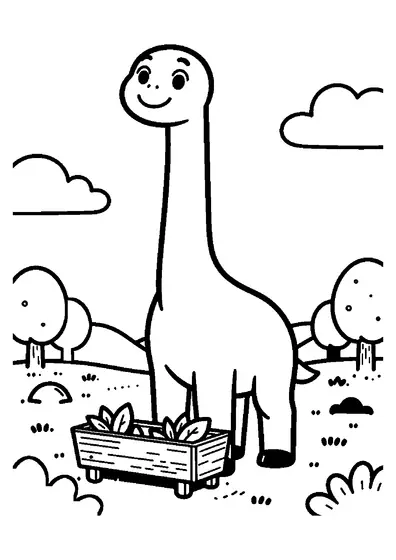
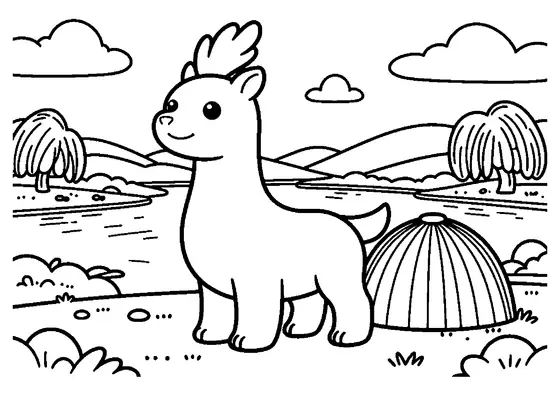
Alamosaurus at a Wooden Feeder
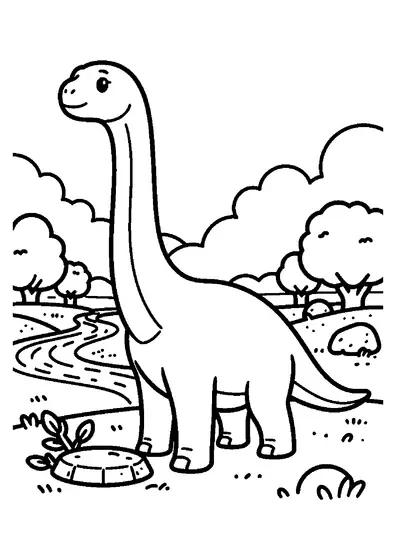
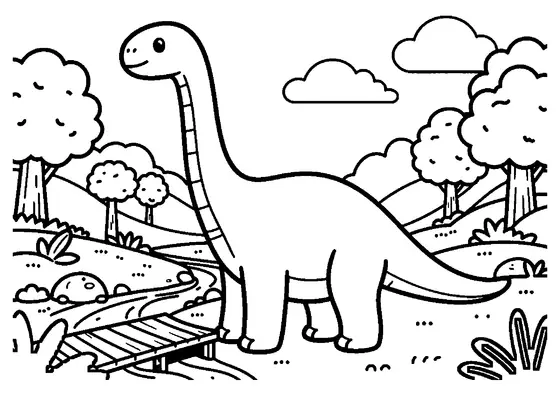
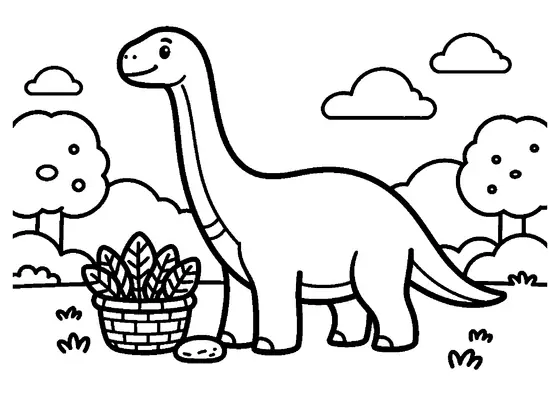
A young Alamosaurus stands beside a wide wooden feeder on a broad open plain landscape.

A4 format (portrait), black outlines on a white background · for home and classroom use
All coloring pages: Herbivorous Dinosaur Coloring Pages
Similar coloring pages: Herbivorous Dinosaur Coloring Pages

What else can you print? Free, no account needed
Custom Name Coloring Pages
Enter your child's name to generate a custom coloring page featuring large outline letters to color and decorate.
Open generator →Connect the Dots Generator
Eight connect-the-dots pictures across three difficulty levels. Features faint outline guides for younger children and dots only for older kids.
Open generator →Printables
Worksheets, tracing lines, mazes and dot-to-dots in A4.
Browse printables →
Alamosaurus on the Open Plain
A young long-necked Alamosaurus gathers near a broad wooden feeder placed out on the open plains. A simple plain landscape spreads out behind the dinosaur.
Facts About Alamosaurus and Large Herbivores
Alamosaurus was one of the largest dinosaurs to inhabit North America, belonging to the giant long-necked titanosaur family. Large land animals require massive amounts of plant material daily, which livestock farmers manage today using heavy wooden feeding troughs. Even as juveniles, titanosaurs grew rapidly by constantly feeding on nutritious foliage across grassy, open territories.
Realistic Colors for Alamosaurus and the Plains
- Alamosaurus body: Slate gray, elephant gray, or dusty brown
- Soft underbelly: Warm cream or pale yellowish-tan
- Wooden feeder: Weathered wood gray, cedar brown, or rustic tan
- Open plain ground: Golden prairie yellow, dry grass green, or sandy brown
- Horizon sky: Soft azure blue or warm sunset orange