
Telmatosaurus by a Wooden Bench
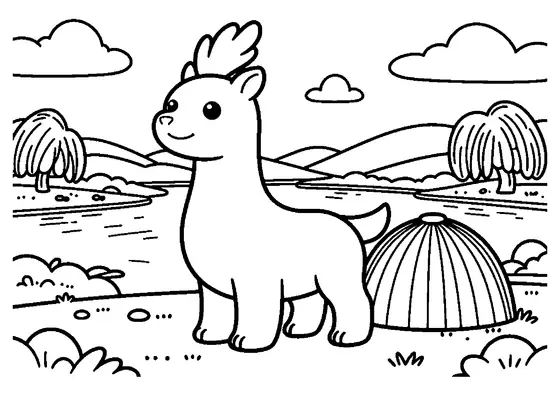
A Telmatosaurus rests next to a wooden plank bench at the edge of a swampy glade surrounded by wetland plants.

A4 format (portrait), black outlines on a white background · for home and classroom use
All coloring pages: Herbivorous Dinosaur Coloring Pages
Similar coloring pages: Herbivorous Dinosaur Coloring Pages



What else can you print? Free, no account needed
Custom Name Coloring Pages
Enter your child's name to generate a custom coloring page featuring large outline letters to color and decorate.
Open generator →Connect the Dots Generator
Eight connect-the-dots pictures across three difficulty levels. Features faint outline guides for younger children and dots only for older kids.
Open generator →Printables
Worksheets, tracing lines, mazes and dot-to-dots in A4.
Browse printables →
Telmatosaurus in a Swampy Glade
A Telmatosaurus stands next to a wooden bench made of heavy planks. Wetland plants grow along the edge of the swampy glade around it.
Facts About Telmatosaurus and Wetlands
Telmatosaurus was a dwarf duck-billed dinosaur that lived on prehistoric islands in what is now modern Europe. Swampy glades feature nutrient-rich mud and standing water that support unique water-loving plant species.
Colors of a Prehistoric Swamp Environment
- Telmatosaurus hide: mottled olive green or dark charcoal gray
- Wooden bench: weathered oak brown or rustic timber gray
- Swamp plants: deep emerald green and marshy yellow foliage
- Marsh soil: dark chocolate brown mud
- Glade water: hazy brownish green water surface