
Haplocanthosaurus by the Clay Jar
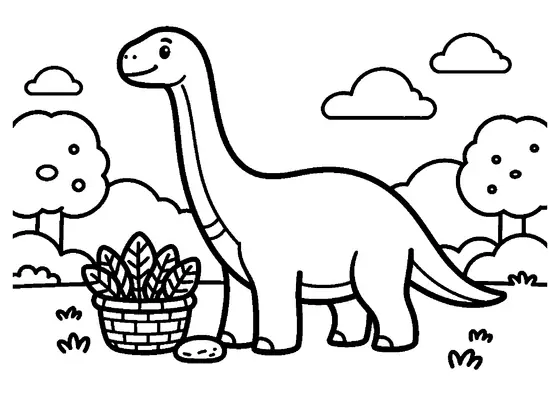
A prehistoric clearing sets the scene with a Haplocanthosaurus resting near a large clay jar alongside rocks, trees, and clouds.

A4 format (portrait), black outlines on a white background · for home and classroom use
All coloring pages: Herbivorous Dinosaur Coloring Pages
Similar coloring pages: Herbivorous Dinosaur Coloring Pages



What else can you print? Free, no account needed
Custom Name Coloring Pages
Enter your child's name to generate a custom coloring page featuring large outline letters to color and decorate.
Open generator →Connect the Dots Generator
Eight connect-the-dots pictures across three difficulty levels. Features faint outline guides for younger children and dots only for older kids.
Open generator →Printables
Worksheets, tracing lines, mazes and dot-to-dots in A4.
Browse printables →
Haplocanthosaurus in a Prehistoric Landscape
The Haplocanthosaurus rests in a natural clearing, situated next to a large clay jar. Rocks scatter across the ground, while trees stand in the background under a sky with floating clouds.
Natural Environment and Fossil Discoveries
Haplocanthosaurus was a sauropod dinosaur that inhabited North America during the Late Jurassic period. Unlike some of its massive relatives, it was somewhat smaller, though it still reached lengths of around fifty feet. Fossil remnants of this herbivore are often unearthed in sedimentary rock layers alongside ancient plant fossils, pointing to habitats filled with conifer trees and primitive vegetation.
Colors of the Prehistoric World
- Haplocanthosaurus skin: Earthy tones such as muted green, olive, brown, or grayish tan
- Clay jar: Terracotta red, warm orange, reddish-brown, or natural earthenware beige
- Rocks: Slate gray, dark charcoal, or weathered granite brown
- Trees: Deep forest green foliage with brown bark
- Clouds: Soft white or pale light gray