
Iguanodon Raising Its Paw
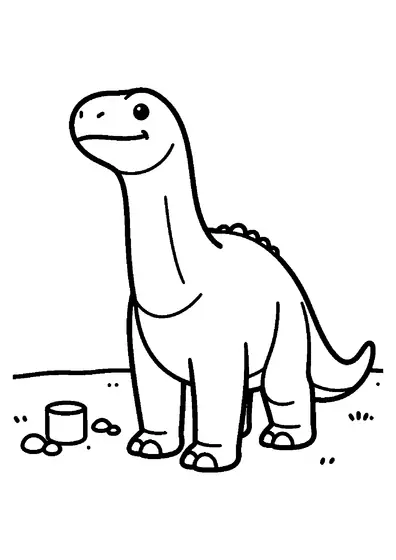
An Iguanodon stands at an angle with its front limb slightly lifted, exposing a narrow beak and a sharp thumb spike.

A4 format (portrait), black outlines on a white background · for home and classroom use
All coloring pages: Herbivorous Dinosaur Coloring Pages
Similar coloring pages: Herbivorous Dinosaur Coloring Pages



What else can you print? Free, no account needed
Custom Name Coloring Pages
Enter your child's name to generate a custom coloring page featuring large outline letters to color and decorate.
Open generator →Connect the Dots Generator
Eight connect-the-dots pictures across three difficulty levels. Features faint outline guides for younger children and dots only for older kids.
Open generator →Printables
Worksheets, tracing lines, mazes and dot-to-dots in A4.
Browse printables →
Iguanodon Displaying Its Thumb Spike
Positioned at an angle, the Iguanodon features a distinctive beak and an elevated front claw. Its specialized thumb spike stands out clearly on its front limb, illustrating the unique anatomical structure of this early plant-eating herbivore.
Fascinating Facts About Iguanodon
When Iguanodon was first discovered in the nineteenth century, paleontologists mistakenly placed its thumb spike on top of its nose like a rhinoceros horn. Later full skeletal discoveries revealed that the spike was actually attached to the wrist as a specialized thumb.
Real-World Colors of Iguanodon
- Back and upper torso: brownish green, gray-green, or russet brown
- Stomach area: light sand, pale cream, or soft gray
- Beak and claws: dark gray or black
- Thumb spike: off-white, yellowish bone color, or gray