
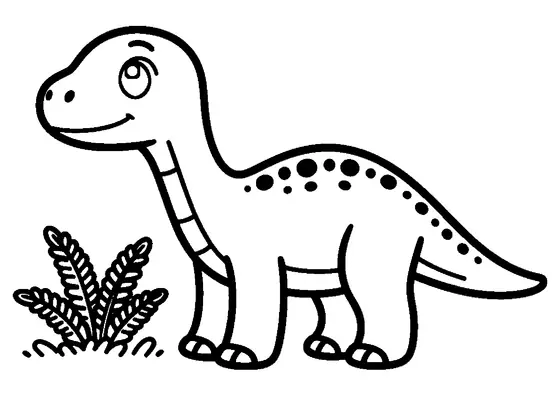
Amargasaurus Next to a Fern
An Amargasaurus stands beside an ancient fern while displaying its characteristic double row of tall neck spines.

A4 format (portrait), black outlines on a white background · for home and classroom use
All coloring pages: Herbivorous Dinosaur Coloring Pages
Similar coloring pages: Herbivorous Dinosaur Coloring Pages




What else can you print? Free, no account needed
Custom Name Coloring Pages
Enter your child's name to generate a custom coloring page featuring large outline letters to color and decorate.
Open generator →Connect the Dots Generator
Eight connect-the-dots pictures across three difficulty levels. Features faint outline guides for younger children and dots only for older kids.
Open generator →Printables
Worksheets, tracing lines, mazes and dot-to-dots in A4.
Browse printables →
The Unique Spiked Amargasaurus and Prehistoric Ferns
Amargasaurus was a remarkable sauropod dinosaur known for its unique neck structure. Standing near low-growing foliage like ferns, this plant-eating giant spent much of its day foraging in prehistoric ecosystems. The distinctive spines growing along its neck gave it a striking appearance unlike almost any other herbivore from the Early Cretaceous period.
Fascinating Characteristics of Amargasaurus
While most sauropods relied on massive body size to deter predators, Amargasaurus developed sharp neural spines extending from its neck vertebrae. Paleontologists believe these twin rows of spines may have supported a sail of skin or served as an impressive display to ward off threats. Unlike giant sauropods that reached up into high trees, Amargasaurus had a lower neck posture optimized for grazing on lush ground ferns.
Real Natural Colors of Amargasaurus
- Amargasaurus skin: muted tones of olive green, brownish gray, or earthy tan to blend into woodland shade
- Neck spines: slightly darker shades of slate gray, brown, or weathered bone tones
- Fern fronds: rich forest green, emerald, or bright yellow-green on fresh growing tips
- Underbelly: lighter shades of beige, pale cream, or soft sandy gray