
Pterosaur Flying Over a Snowy Cliff
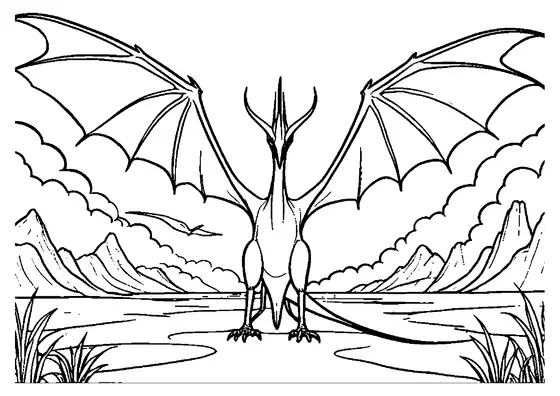
A broad-winged pterosaur soars above a snowy cliff, sharp rock formations, and a mountain valley stretching below.

A4 format (landscape), black outlines on a white background · for home and classroom use
All coloring pages: Flying and Sea Reptile Coloring Pages
Similar coloring pages: Flying and Sea Reptile Coloring Pages




What else can you print? Free, no account needed
Custom Name Coloring Pages
Enter your child's name to generate a custom coloring page featuring large outline letters to color and decorate.
Open generator →Connect the Dots Generator
Eight connect-the-dots pictures across three difficulty levels. Features faint outline guides for younger children and dots only for older kids.
Open generator →Printables
Worksheets, tracing lines, mazes and dot-to-dots in A4.
Browse printables →
Pterosaur Above a Snowy Mountain Landscape
The large pterosaur is shown in flight at the center of the scene, with its membranous wings spread from side to side. Towering peaks and steep rocks frame the valley beneath it, creating a high-altitude view over rugged, snow-touched terrain.
Gliding Over Mountain Air
Wind moving toward a mountain is often pushed upward along its slopes. A flying animal can use this rising air to maintain height while gliding, reducing how often it must flap its wings. Modern birds use the same kind of lift around ridges and cliffs.
Realistic Colors for the Pterosaur and Peaks
- Pterosaur body: plausible brown, gray, rust, or sandy tones
- Wing membranes: tan, muted gray, dark brown, or softly mottled shades
- Snow: white with pale blue or lavender shadows
- Exposed cliffs: granite gray, charcoal, brown, or reddish rock
- Distant mountain valley: deep green, brown, blue-gray, or snowy white depending on elevation