
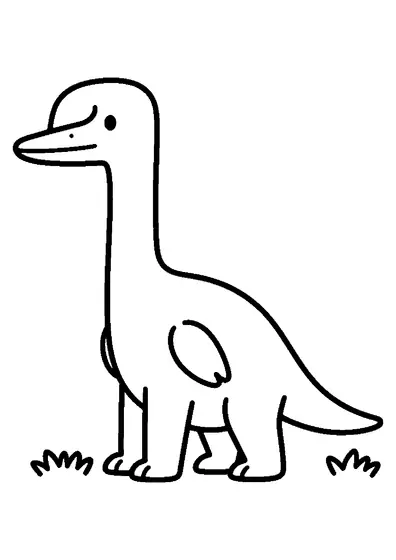
Pterodaustro Standing Beside the Grass
A Pterodaustro stands upright among tall grass, stretching its long neck and holding both membranous wings open.

A4 format (portrait), black outlines on a white background · for home and classroom use
All coloring pages: Flying and Sea Reptile Coloring Pages
Similar coloring pages: Flying and Sea Reptile Coloring Pages



What else can you print? Free, no account needed
Custom Name Coloring Pages
Enter your child's name to generate a custom coloring page featuring large outline letters to color and decorate.
Open generator →Connect the Dots Generator
Eight connect-the-dots pictures across three difficulty levels. Features faint outline guides for younger children and dots only for older kids.
Open generator →Printables
Worksheets, tracing lines, mazes and dot-to-dots in A4.
Browse printables →
What the Pterodaustro Beside the Grass Depicts
The prehistoric flying reptile is shown on the ground with a tall posture and widely spread wings. Its long neck supports a distinctive curved beak, while clumps of high grass surround its legs. The scene focuses on the unusual body shape that makes Pterodaustro recognizable among pterosaurs.
A Specialized Beak for Feeding
Pterodaustro had many slender teeth packed closely inside its upturned lower jaw. Scientists think this arrangement worked like a filter, helping it strain small food from shallow water. Its feeding style is often compared in general terms with modern animals that separate tiny organisms from water, though its anatomy was uniquely pterosaurian.
Possible Natural Colors for Pterodaustro
- Body covering: pale brown, warm gray, sandy tan, or muted rust
- Wing membranes: beige, gray-brown, or dusky pink
- Long neck: a lighter or darker variation of the body color
- Curved beak: dark gray, brown, or black
- Tall grass: fresh green, olive, straw yellow, or golden brown