
Pterosaur Gliding Over a Hill
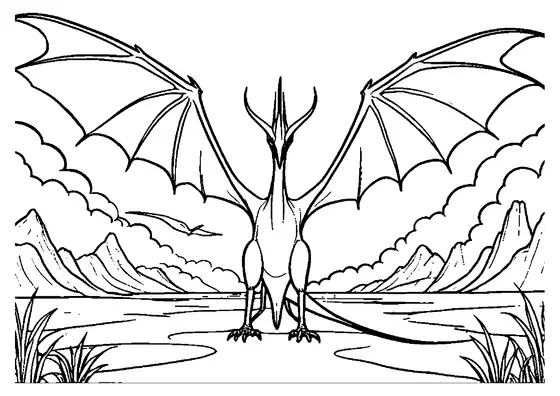
A large pterosaur glides above a hill and winding river, crossing a mountain valley on widely spread membranous wings.

A4 format (landscape), black outlines on a white background · for home and classroom use
All coloring pages: Flying and Sea Reptile Coloring Pages
Similar coloring pages: Flying and Sea Reptile Coloring Pages




What else can you print? Free, no account needed
Custom Name Coloring Pages
Enter your child's name to generate a custom coloring page featuring large outline letters to color and decorate.
Open generator →Connect the Dots Generator
Eight connect-the-dots pictures across three difficulty levels. Features faint outline guides for younger children and dots only for older kids.
Open generator →Printables
Worksheets, tracing lines, mazes and dot-to-dots in A4.
Browse printables →
A Pterosaur Gliding Over a Hill
The flying reptile dominates the center of the scene with its wings extended in a steady glide. Mountain slopes fill the lower part of the landscape, and a river follows the valley beneath the animal.
Why Valleys Can Help Gliders
Sun-warmed hillsides and winds deflected by slopes can produce rising currents of air. Broad-winged animals may circle or glide through those currents to conserve energy while traveling. Rivers also shape valleys over long periods by carrying away loosened rock and soil.
Natural Colors Across the Hill and Valley
- Pterosaur body: plausible tan, brown, gray, or rusty red
- Wing membranes: beige, warm brown, smoky gray, or mottled earth tones
- Mountain slopes: forest green, ocher, brown, or rocky gray
- River: blue, green, gray-blue, or silver where it reflects the sky
- Exposed rock: charcoal, sandstone brown, reddish brown, or pale gray