
Edmontonia by a Rocky Ledge in the Forest
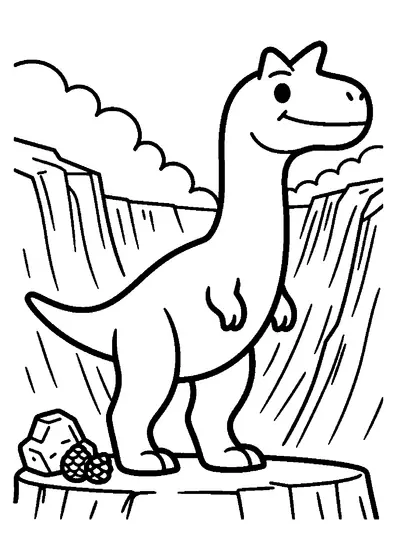
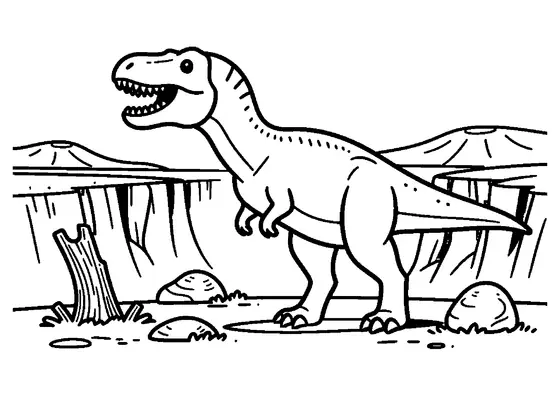
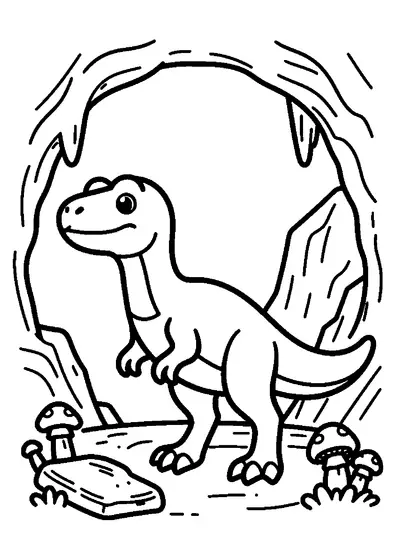
A heavily armored dinosaur pauses near a stone ledge in a dense ancient forest.

A4 format (portrait), black outlines on a white background · for home and classroom use
All coloring pages: Dinosaur Coloring Pages
Similar coloring pages: Dinosaur Coloring Pages


What else can you print? Free, no account needed
Custom Name Coloring Pages
Enter your child's name to generate a custom coloring page featuring large outline letters to color and decorate.
Open generator →Connect the Dots Generator
Eight connect-the-dots pictures across three difficulty levels. Features faint outline guides for younger children and dots only for older kids.
Open generator →Printables
Worksheets, tracing lines, mazes and dot-to-dots in A4.
Browse printables →
An Armored Dinosaur in the Prehistoric Forest
This scene features an Edmontonia standing next to a stone ledge in a dense forest landscape. The heavily built herbivore rests beside natural rock formations surrounded by prehistoric trees and foliage.
Defense Mechanisms of Edmontonia
Edmontonia belonged to the nodosaurid family, a group of armored dinosaurs that lacked tail clubs but possessed heavy bony plates embedded in their skin. Prominent forward-pointing spikes lined its neck and shoulders, providing protection against attacks from large predators. When threatened, Edmontonia likely crouched close to the ground to shield its soft underbelly.
Natural Palette for Edmontonia and Forest Scenery
- Edmontonia back armor: dark olive green, rusty brown, or muddy gray
- Shoulder spikes: pale horn white or weathered tan
- Stone ledge: cool blue-gray, mossy green, or granite gray
- Prehistoric forest foliage: deep fern green, golden yellow, and pine green