
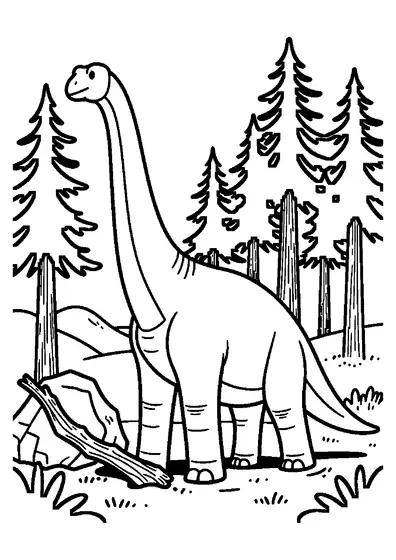
Dinosaur Resting on the Edge of a Cliff
A four-legged dinosaur pauses at the edge of a rocky cliff, facing outward beside tall stone walls.

A4 format (portrait), black outlines on a white background · for home and classroom use
All coloring pages: Dinosaur Coloring Pages
Similar coloring pages: Dinosaur Coloring Pages



What else can you print? Free, no account needed
Custom Name Coloring Pages
Enter your child's name to generate a custom coloring page featuring large outline letters to color and decorate.
Open generator →Connect the Dots Generator
Eight connect-the-dots pictures across three difficulty levels. Features faint outline guides for younger children and dots only for older kids.
Open generator →Printables
Worksheets, tracing lines, mazes and dot-to-dots in A4.
Browse printables →
A Dinosaur at the Rocky Ledge
The prehistoric animal stands in the center on all four feet near the top of a steep cliff. Its body faces the open drop as though it is looking across the land beyond. High vertical rock faces rise on the right, giving the setting the feel of a rugged elevated landscape.
What Cliffs Can Reveal About Ancient Landscapes
Rock faces expose stacked layers that formed at different times, sometimes preserving fossils or traces of past environments. Geologists can examine these layers to learn whether an area was once covered by rivers, dunes, shallow seas, or volcanic material. Erosion gradually shapes exposed rock into ledges, cracks, and steep walls.
Real-World Colors for Dinosaur and Rock
- Dinosaur skin: its true color is unknown; earthy green, brown, tan, or gray can suit a land animal
- Dinosaur underside: a paler cream, beige, or light gray
- Eyes: dark brown, amber, or black
- Cliff surface: sandstone tan, rusty red, slate gray, or brown
- Rock crevices: deeper gray or dark brown where less light reaches