
Little Dinosaur Sitting on a Log
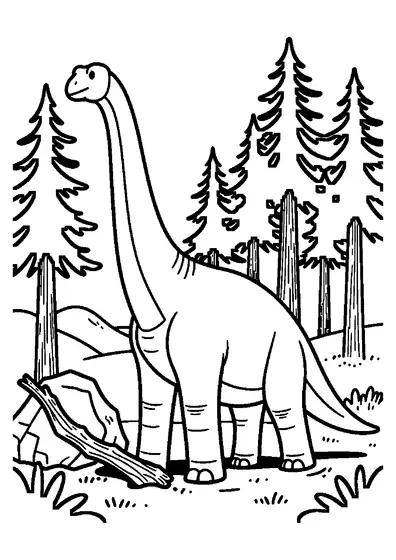
A smiling little long-necked dinosaur stands on a wooden log among clumps of grass and leafy plants.

A4 format (portrait), black outlines on a white background · for home and classroom use
All coloring pages: Dinosaur Coloring Pages
Similar coloring pages: Dinosaur Coloring Pages


What else can you print? Free, no account needed
Custom Name Coloring Pages
Enter your child's name to generate a custom coloring page featuring large outline letters to color and decorate.
Open generator →Connect the Dots Generator
Eight connect-the-dots pictures across three difficulty levels. Features faint outline guides for younger children and dots only for older kids.
Open generator →Printables
Worksheets, tracing lines, mazes and dot-to-dots in A4.
Browse printables →
A Little Dinosaur Among the Plants
The dinosaur is shown on four legs with its long neck raised and a friendly expression on its face. It stands on a fallen wooden log, while grass and broad leaves grow around it. The simple scene places the prehistoric animal close to the low vegetation of its surroundings.
Curious Facts About Long-Necked Dinosaurs
Many long-necked dinosaurs were plant eaters that used their height to reach vegetation growing above the ground. Their long tails helped balance the weight of their necks as they walked. Scientists study fossilized bones and footprints to understand how these animals stood and moved.
Colors Found in the Prehistoric World
- Dinosaur skin: the exact color is unknown and may have included earthy browns, greens, grays, or patterns
- Eyes: dark brown or black is a natural-looking choice for many reptiles
- Wooden log: tan, warm brown, or dark brown
- Grass: fresh green, olive green, or dry golden brown
- Plant leaves: light green, deep green, or reddish green