
Allosaurus Beside a Sandy Riverbed
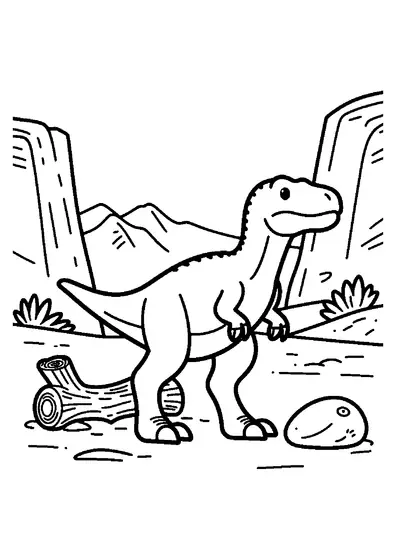
A powerful Allosaurus stands near a dry, sandy riverbed in a landscape from the Jurassic world.

A4 format (landscape), black outlines on a white background · for home and classroom use
All coloring pages: Dinosaur Coloring Pages
Similar coloring pages: Dinosaur Coloring Pages


What else can you print? Free, no account needed
Custom Name Coloring Pages
Enter your child's name to generate a custom coloring page featuring large outline letters to color and decorate.
Open generator →Connect the Dots Generator
Eight connect-the-dots pictures across three difficulty levels. Features faint outline guides for younger children and dots only for older kids.
Open generator →Printables
Worksheets, tracing lines, mazes and dot-to-dots in A4.
Browse printables →
Allosaurus at a sandy riverbed
The featured dinosaur is a large predator with strong hind legs and a mouth filled with sharp teeth. It occupies the area beside a dry riverbed, where exposed sand marks the course once taken by water. Allosaurus was one of the prominent meat-eating dinosaurs of the Late Jurassic and is known from numerous fossil remains.
Life around changing river channels
Riverbeds can alternate between flowing water and dry ground as seasons and local conditions change. In the Jurassic, floodplains and river systems could attract many animals because water and vegetation supported entire food webs. Allosaurus shared such ecosystems with large plant-eating dinosaurs, including several kinds of long-necked sauropods.
Real-world colors linked to Allosaurus and the riverbed
- Allosaurus skin: its exact living color and pattern remain unknown
- Eyes: no fossil evidence establishes the original iris color
- Teeth: naturally ivory or cream rather than bright white
- Claws: their keratin covering may have been dark or muted, but its actual shade is unknown
- Dry riverbed sand: commonly tan, beige, pale brown, reddish, or gray depending on the local rock