
Ankylosaurus on a Sandstone Canyon Trail
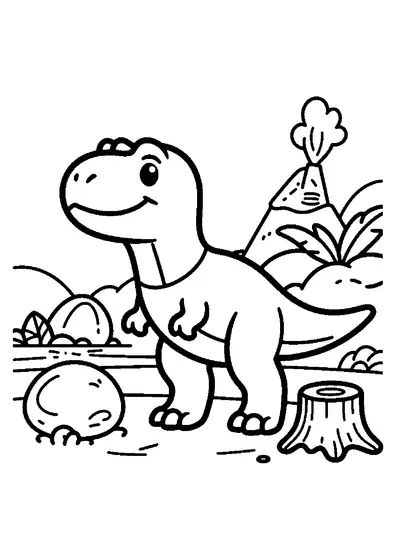
An armored Ankylosaurus travels along a trail between the layered walls of a sandstone canyon.

A4 format (landscape), black outlines on a white background · for home and classroom use
All coloring pages: Dinosaur Coloring Pages
Similar coloring pages: Dinosaur Coloring Pages




What else can you print? Free, no account needed
Custom Name Coloring Pages
Enter your child's name to generate a custom coloring page featuring large outline letters to color and decorate.
Open generator →Connect the Dots Generator
Eight connect-the-dots pictures across three difficulty levels. Features faint outline guides for younger children and dots only for older kids.
Open generator →Printables
Worksheets, tracing lines, mazes and dot-to-dots in A4.
Browse printables →
Ankylosaurus on the Canyon Trail
The picture follows an Ankylosaurus through a sandstone canyon, with layered rock walls forming the surrounding landscape. The dinosaur carries heavy body armor and a large club at the end of its tail. Its low build, broad body, and sturdy legs suit an animal protected from above and along its sides by bony plates.
Interesting Facts About Sandstone Canyons
Sandstone begins as grains of sand that become compacted and cemented together over long periods. Water and wind can gradually wear away weaker sections, leaving cliffs, narrow passages, and visible layers. Ankylosaurus was a plant-eating dinosaur, and its tail club could have delivered a powerful defensive blow.
Natural Colors of Ankylosaurus and Sandstone
- Ankylosaurus skin: the original color is unknown; muted brown, olive, tan, or gray are believable choices
- Bony armor: earthy gray-brown or tan, possibly with darker areas around raised plates
- Tail club: brown, gray, or ocher tones like the rest of the armored body
- Sandstone walls: tan, golden brown, orange, red, or pale cream depending on mineral content
- Canyon trail: sandy beige, reddish brown, or dusty gray