
Dense Leaf and Twig Botanical Pattern
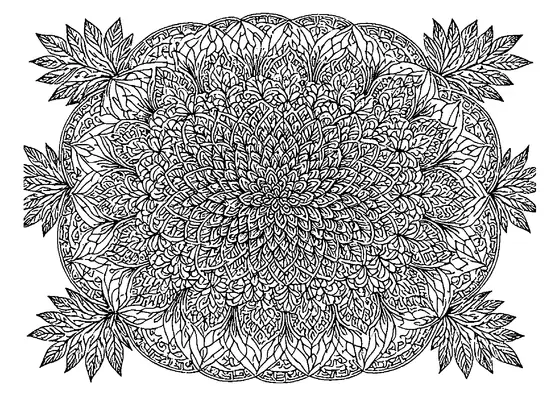
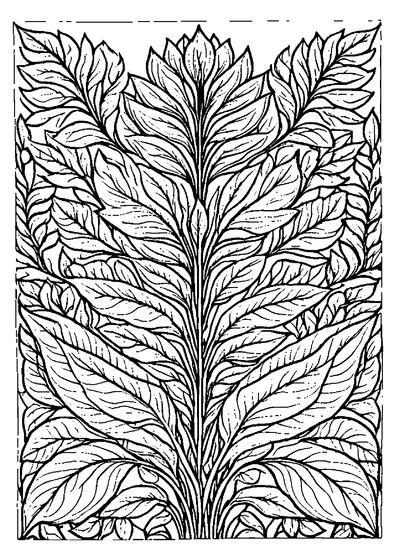
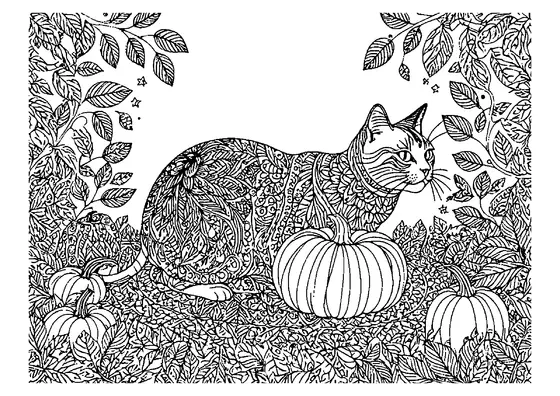
A repeating field of slender leaves and branching twigs spreads across the page in upright and diagonal directions.

A4 format (landscape), black outlines on a white background · for home and classroom use
All coloring pages: Pattern and Ornament Coloring Pages
Similar coloring pages: Pattern and Ornament Coloring Pages


What the Leaf and Twig Pattern Shows
Numerous narrow leaves grow closely along a dense network of vertical and slanting twigs. The repeated branches overlap visually to form a continuous botanical pattern rather than a single plant or separate bouquet. Changes in leaf direction keep the arrangement varied while maintaining a steady rhythm across the entire scene.
How Leaves and Twigs Work
Leaves use sunlight to make sugars that support a plant’s growth, while their veins carry water and help move nutrients. Twigs extend a plant’s branching structure and hold leaves where they can receive light, although their exact arrangement differs widely between species.
Natural Colors of Leaves and Twigs
- Young leaves: light green, yellow-green, or bronze on some plants
- Mature leaves: medium green, deep green, or blue-green
- Leaf veins: pale green, yellow-green, or reddish green
- Young twigs: green, reddish brown, or tan
- Woody twigs: light brown, dark brown, or gray-brown