
Circular Botanical Leaf Mandala
A large circular botanical mandala fills the center, with a floral rosette inside and leafy vines decorating all four corners.

A4 format (landscape), black outlines on a white background · for home and classroom use
All coloring pages: Pattern and Ornament Coloring Pages
Similar coloring pages: Pattern and Ornament Coloring Pages


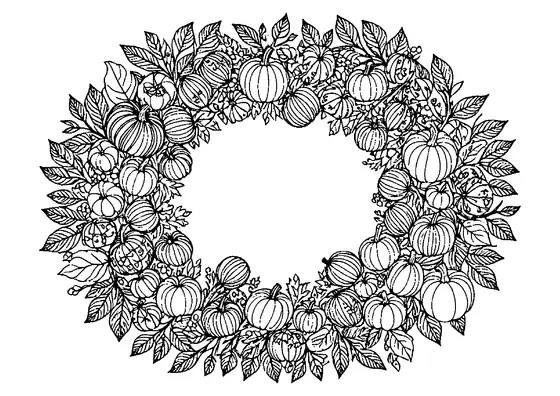
The Circular Botanical Leaf Mandala Design
The main motif is a round, densely arranged botanical pattern built around a central rosette. Repeated petals, leaves, and ornamental plant forms spread outward in balanced rings. Separate vine branches curl through each corner, linking the circular centerpiece visually with the surrounding space while preserving the mandala's strong radial structure.
Fascinating Facts About Mandalas and Plant Symmetry
The word mandala is commonly used for a design organized around a center, although its cultural meanings vary across traditions. Radial symmetry also appears in nature: many flowers arrange petals around a central disk or receptacle. Climbing plants use several methods to gain support, including twining stems, tendrils, hooks, or clinging roots.
True-to-Life Botanical Colors
- Central flower: yellow, white, pink, red, purple, orange, or blue, depending on the imagined species
- Inner petals: one hue throughout or a lighter shade near the tips
- Leaf blades: fresh green, deep green, yellow-green, or seasonal red and gold
- Leaf veins: usually green, pale green, reddish, or brown
- Vine stems: green when young and often brown as they become woody