
Otter by the Pond Easter Basket
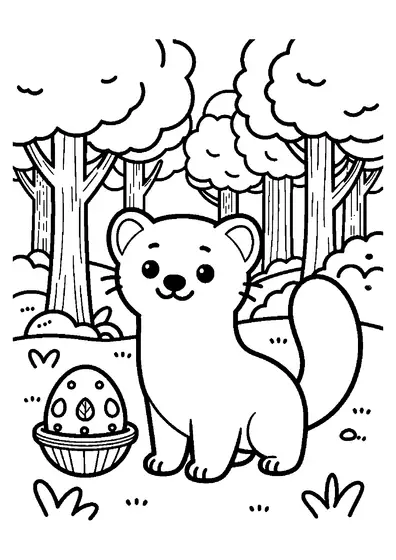
A sleek otter rests along a quiet pond next to a large basket filled with decorated Easter eggs surrounded by reeds and stones.

A4 format (landscape), black outlines on a white background · for home and classroom use
All coloring pages: Woodland Animal Coloring Pages
Similar coloring pages: Woodland Animal Coloring Pages



What else can you print? Free, no account needed
Custom Name Coloring Pages
Enter your child's name to generate a custom coloring page featuring large outline letters to color and decorate.
Open generator →Connect the Dots Generator
Eight connect-the-dots pictures across three difficulty levels. Features faint outline guides for younger children and dots only for older kids.
Open generator →Printables
Worksheets, tracing lines, mazes and dot-to-dots in A4.
Browse printables →
An Otter Beside a Spring Pond Easter Basket
A sleek otter rests near a large basket filled with decorated Easter eggs along the edge of a spring pond. Gentle waves lap against smooth stones along the shoreline while tall reeds sway in the soft breeze. The combination of freshwater plants, water, and festive eggs creates a gentle spring scenery.
Interesting Facts About River Otters
Otters have extremely dense coat fur containing up to one million hairs per square inch, which traps air and keeps their skin dry underwater. They rely on sensitive whiskers called vibrissae to feel vibrations in murky water, helping them locate fish and crabs quickly. Otters also love to slide down muddy banks and snow slopes purely for play and social bonding.
Natural Colors of the Otter and Pond
- Otter coat: deep brown on the back with a lighter cream throat
- Otter nose and pads: dark gray or black
- Pond reeds and grasses: bright green and olive
- River stones: muted gray, beige, and tan
- Easter egg basket: natural woven brown or tan straw