
Great Diving Beetle by a Leaf
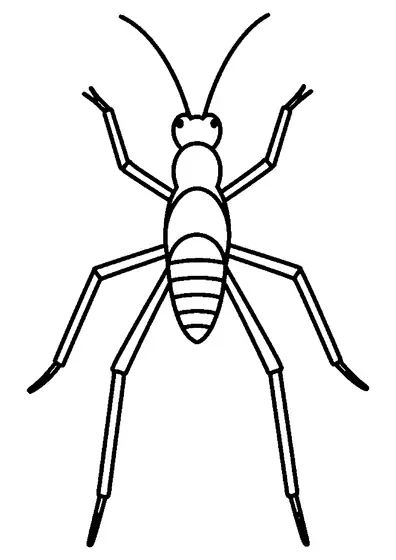
An aquatic great diving beetle stays near a floating leaf in a freshwater pond.

A4 format (landscape), black outlines on a white background · for home and classroom use
All coloring pages: Woodland Animal Coloring Pages
Similar coloring pages: Woodland Animal Coloring Pages


What else can you print? Free, no account needed
Custom Name Coloring Pages
Enter your child's name to generate a custom coloring page featuring large outline letters to color and decorate.
Open generator →Connect the Dots Generator
Eight connect-the-dots pictures across three difficulty levels. Features faint outline guides for younger children and dots only for older kids.
Open generator →Printables
Worksheets, tracing lines, mazes and dot-to-dots in A4.
Browse printables →
The Great Diving Beetle in a Freshwater Pond
A great diving beetle with an oval shape is depicted from above next to a leaf. The broad back legs and smooth wing covers stand out as key features of this aquatic insect.
Adaptations of the Great Diving Beetle
Great diving beetles inhabit quiet freshwater bodies rich in vegetation, where plants offer shelter and hunting grounds. To breathe underwater, these insects swim up to the surface and trap a bubble of fresh air beneath their hardened wing covers before diving down again. Their flattened hind legs function like paddles to propel them quickly through the water.
Natural Colors of the Great Diving Beetle
- Great diving beetle wing covers: dark olive-green or deep brownish-black with a glossy sheen
- Edge of the beetle body: yellow or light golden-brown along the outer margin
- Aquatic leaf: natural shades of green, ranging from pale olive to vibrant forest green
- Beetle legs: dark brown with yellow highlights on the swimming fringes