
Rockhopper Penguin on an Island Meadow
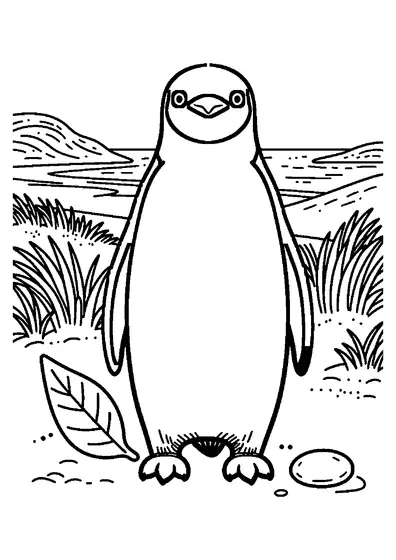
A distinctively crested rockhopper penguin rests quietly in a windy subantarctic meadow beside lush foliage and rugged stone.

A4 format (portrait), black outlines on a white background · for home and classroom use
All coloring pages: Penguin Coloring Pages
Similar coloring pages: Penguin Coloring Pages


What else can you print? Free, no account needed
Custom Name Coloring Pages
Enter your child's name to generate a custom coloring page featuring large outline letters to color and decorate.
Open generator →Connect the Dots Generator
Eight connect-the-dots pictures across three difficulty levels. Features faint outline guides for younger children and dots only for older kids.
Open generator →Printables
Worksheets, tracing lines, mazes and dot-to-dots in A4.
Browse printables →
Subantarctic Island Habitat
A crested rockhopper penguin occupies an open coastal meadow on a remote subantarctic island. Surrounded by sturdy coastal plants with broad leaves and natural rock formations, these seabirds spend part of their year nesting away from icy shores.
Survival in Coastal Meadows
Rockhopper penguins build nests on rocky cliffs and coastal grasslands rather than solid ice. The dense vegetation and scattered boulders provide shelter from harsh ocean winds during breeding season. Unlike larger penguins that slide on their bellies, rockhoppers navigate steep grassy terrain by hopping with both feet together.
Authentic Colors of Crested Penguins and Vegetation
- Head crests: bright yellow feather plumes extending behind the eyes
- Penguin body: slate black back feathers with a stark white belly
- Eyes and beak: vivid red eyes and a stout reddish-brown beak
- Island plants and leaves: deep forest green or earthy olive tones
- Meadow rocks: dark gray, brown, or moss-covered charcoal