
Penguin Leaping Among Ice Floes
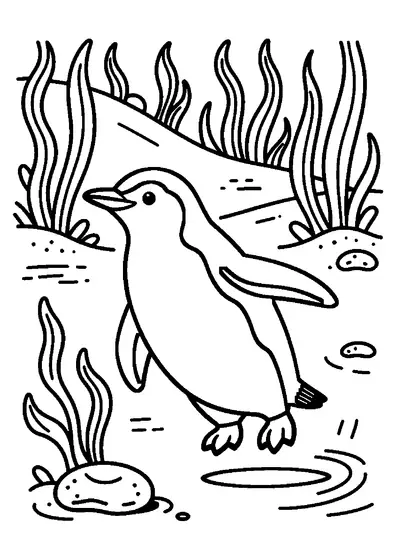
An agile penguin propels itself high above an icy ocean channel surrounded by broad floating ice floes.

A4 format (landscape), black outlines on a white background · for home and classroom use
All coloring pages: Penguin Coloring Pages
Similar coloring pages: Penguin Coloring Pages
What else can you print? Free, no account needed
Custom Name Coloring Pages
Enter your child's name to generate a custom coloring page featuring large outline letters to color and decorate.
Open generator →Connect the Dots Generator
Eight connect-the-dots pictures across three difficulty levels. Features faint outline guides for younger children and dots only for older kids.
Open generator →Printables
Worksheets, tracing lines, mazes and dot-to-dots in A4.
Browse printables →
Oceanic Leap Across Floating Ice
A penguin launches itself out of open water between expansive sheets of sea ice. In polar marine ecosystems, moving between ocean channels and broad ice floes is an essential part of daily life for seabirds navigating freezing waters.
Ocean Hazards and Leaping Habits
Penguins frequently launch themselves out of the water onto sea ice to escape underwater predators like leopard seals or killer whales. Jumping clear of the sea also allows them to regain their breath rapidly while maintaining forward momentum. This energetic aerial movement, known as porpoising when done repeatedly, helps birds travel efficiently across cold ocean surfaces.
Natural Colors of Polar Seabirds and Sea Ice
- Penguin plumage: dense black feathers on the back and crisp white feathers across the chest
- Penguin beak and feet: dark gray or muted orange-brown tones
- Ocean water: deep navy blue or dark turquoise
- Ice floes: bright white with soft light blue shading along submerged edges