
Rockhopper Penguin on a High Cliff
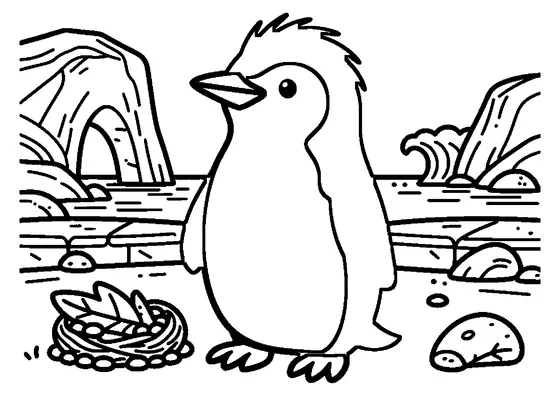
A rockhopper penguin rests near a nest on a steep coastal cliff above an ocean cove.

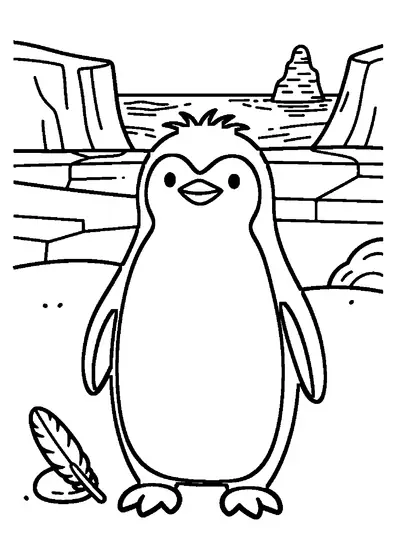
A4 format (portrait), black outlines on a white background · for home and classroom use
All coloring pages: Penguin Coloring Pages
Similar coloring pages: Penguin Coloring Pages




What else can you print? Free, no account needed
Custom Name Coloring Pages
Enter your child's name to generate a custom coloring page featuring large outline letters to color and decorate.
Open generator →Connect the Dots Generator
Eight connect-the-dots pictures across three difficulty levels. Features faint outline guides for younger children and dots only for older kids.
Open generator →Printables
Worksheets, tracing lines, mazes and dot-to-dots in A4.
Browse printables →
Coastal Scene with a Rockhopper Penguin
The scenery depicts a crested rockhopper penguin standing on a rugged rocky ledge beside seaweed and a nest. In the background, a wide landscape opens onto a sheltered ocean cove surrounded by steep cliffs.
Rocky Habitat of Crested Penguins
Rockhopper penguins build their colonies on steep, rocky islands in the sub-Antarctic region. Instead of sliding on their bellies like many other penguin species, they navigate boulder-strewn terrain by hopping agilely from rock to rock. Their nests are often simple depressions lined with pebbles, grass, and washed-up seaweed collected near the shore.
Natural Colors of the Rockhopper Penguin
- Head crest: bright yellow feathers that flare outward above red eyes
- Back and flippers: dark black or charcoal black feathers
- Belly and chest: solid white plumages
- Beak: reddish-brown or dark orange
- Seaweed on the rocks: deep brown or dark green hues