
Caribbean Flamingo on a Mangrove Shore
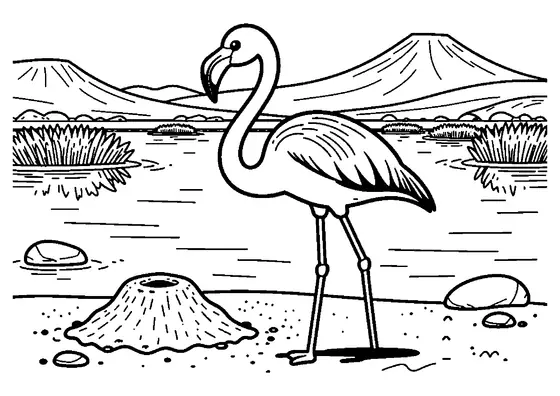
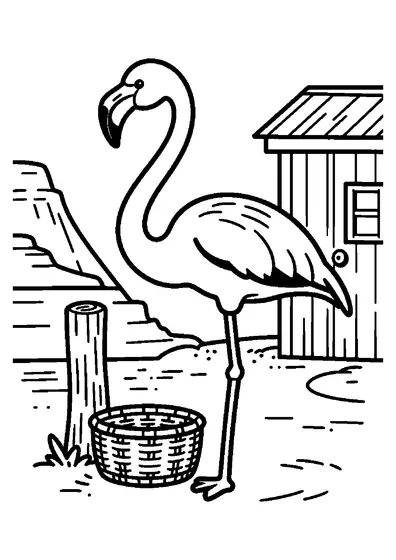
A tall wading bird rests in shallow coastal waters near dense coastal roots and a distant timber observation platform.

A4 format (portrait), black outlines on a white background · for home and classroom use
All coloring pages: Parrot and Flamingo Coloring Pages
Similar coloring pages: Parrot and Flamingo Coloring Pages



What else can you print? Free, no account needed
Custom Name Coloring Pages
Enter your child's name to generate a custom coloring page featuring large outline letters to color and decorate.
Open generator →Connect the Dots Generator
Eight connect-the-dots pictures across three difficulty levels. Features faint outline guides for younger children and dots only for older kids.
Open generator →Printables
Worksheets, tracing lines, mazes and dot-to-dots in A4.
Browse printables →
A Flamingo along the Coastal Mangroves
A tropical flamingo stands balanced in calm lagoon waters near a shoreline thick with mangrove roots. A wooden observation tower overlooks the coastal wetland landscape in the background.
Fascinating Wildlife Facts About Flamingos
Caribbean flamingos get their intense pink and orange plumage from natural carotenoid pigments found in the microscopic algae and small crustaceans they eat. These social birds often balance effortlessly on one leg for long periods to conserve body heat in shallow tropical waters.
Natural Colors of a Mangrove Shoreline
- Caribbean flamingo feathers: Vibrant coral pink, deep salmon orange, and black wing tips
- Flamingo bill: Bright orange-pink with a solid black tip
- Mangrove trees and roots: Dark olive green leaves with reddish-brown submerged roots
- Coastal water: Light turquoise blue or clear tropical green
- Wooden lookout tower: Weathered cedar gray or sun-bleached brown