
Flamingo in a Sunny Bayou
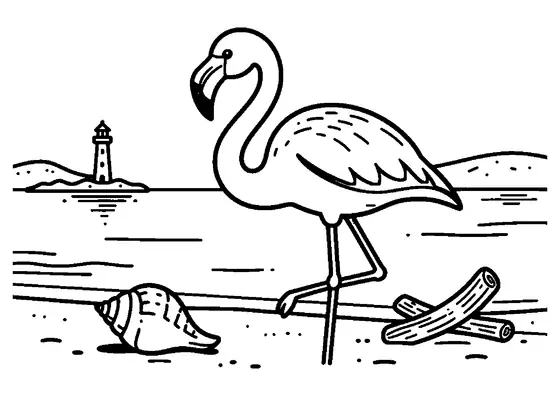
A flamingo balances on one leg in shallow bayou waters surrounded by floating water lily plants.

A4 format (landscape), black outlines on a white background · for home and classroom use
All coloring pages: Parrot and Flamingo Coloring Pages
Similar coloring pages: Parrot and Flamingo Coloring Pages


What else can you print? Free, no account needed
Custom Name Coloring Pages
Enter your child's name to generate a custom coloring page featuring large outline letters to color and decorate.
Open generator →Connect the Dots Generator
Eight connect-the-dots pictures across three difficulty levels. Features faint outline guides for younger children and dots only for older kids.
Open generator →Printables
Worksheets, tracing lines, mazes and dot-to-dots in A4.
Browse printables →
Flamingo Standing in Shallow Waters
A flamingo stands balanced on a single leg in the shallow calm waters of a bayou, surrounded by floating water lily pads. Wetland bayous provide shallow aquatic environments where wading birds can search for food among floating vegetation.
Flamingo Adaptations in Wetlands
Flamingos naturally spend long periods standing on one leg in shallow water, a behavior that helps them conserve body heat and rest their muscle groups. Their unique downward-bent beaks act as natural strainers, filtering tiny algae, brine shrimp, and small aquatic invertebrates from muddy water. The bright pink hue of wild flamingos comes directly from pigments called carotenoids found in the organisms they eat.
Authentic Colors of a Flamingo Environment
- Flamingo plumage: vibrant pink to bright salmon-orange
- Flamingo beak: black tip with a pale pink or yellow base
- Flamingo legs: long pinkish-red legs with webbed feet
- Water lily pads: deep emerald green resting on calm water