
Greater Flamingo by a Wetland Sluice
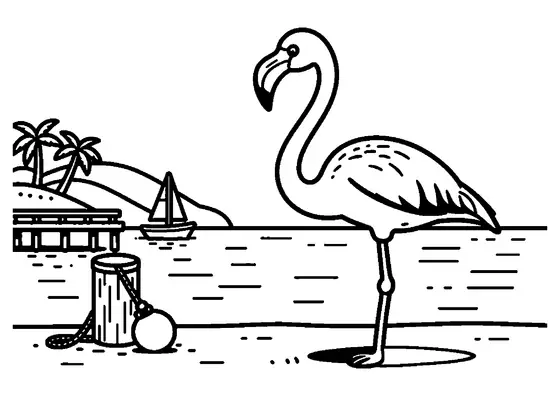
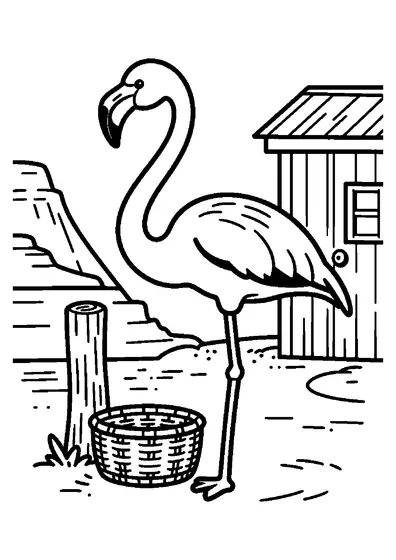
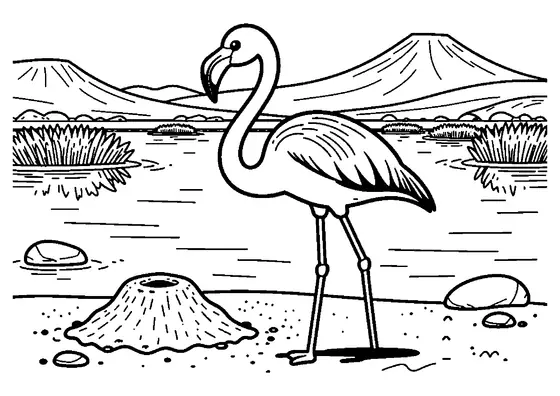
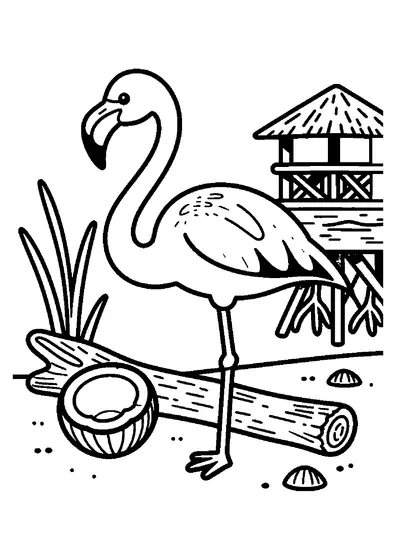
A tall greater flamingo stands beside a mud nesting mound near a wetland sluice and observation point.

A4 format (portrait), black outlines on a white background · for home and classroom use
All coloring pages: Parrot and Flamingo Coloring Pages
Similar coloring pages: Parrot and Flamingo Coloring Pages

What else can you print? Free, no account needed
Custom Name Coloring Pages
Enter your child's name to generate a custom coloring page featuring large outline letters to color and decorate.
Open generator →Connect the Dots Generator
Eight connect-the-dots pictures across three difficulty levels. Features faint outline guides for younger children and dots only for older kids.
Open generator →Printables
Worksheets, tracing lines, mazes and dot-to-dots in A4.
Browse printables →
Greater Flamingo in a Coastal Salt Marsh
The scene displays a greater flamingo standing in a salt-marsh reserve near a wetland sluice structure. A mud nesting mound sits in the surrounding shallow water, while a wetland observatory stands in the background. Man-made water control gates like sluices help maintain stable water levels across protected coastal habitats.
Environmental Facts About Flamingos and Wetlands
Greater flamingos construct cone-shaped nesting mounds out of mud to lift their single egg above fluctuating water levels. Water sluices in wetland reserves allow conservationists to regulate salinity and water depth, ensuring optimal feeding grounds for aquatic birds during autumn migrations. Standing on one leg helps these wading birds conserve body heat while resting in cool marsh waters.
Authentic Colors of the Greater Flamingo
- Greater flamingo plumage: Soft pinkish-white feathers with deep pink wing coverts
- Greater flamingo bill: Pale pink with a distinct black tip
- Nesting mound: Earthy grayish-brown mud
- Wetland sluice gate: Weathered wood grain or dark metal gray