
Flamingo in Water Among Reeds
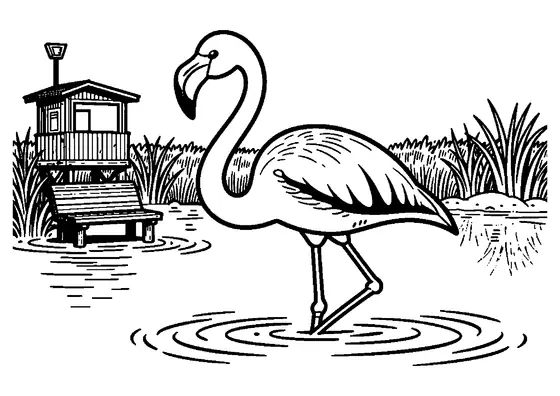
A flamingo stands in shallow water among clusters of reeds and grass.

A4 format (portrait), black outlines on a white background · for home and classroom use
All coloring pages: Parrot and Flamingo Coloring Pages
Similar coloring pages: Parrot and Flamingo Coloring Pages



What else can you print? Free, no account needed
Custom Name Coloring Pages
Enter your child's name to generate a custom coloring page featuring large outline letters to color and decorate.
Open generator →Connect the Dots Generator
Eight connect-the-dots pictures across three difficulty levels. Features faint outline guides for younger children and dots only for older kids.
Open generator →Printables
Worksheets, tracing lines, mazes and dot-to-dots in A4.
Browse printables →
A flamingo wading among reeds
The bird stands in the water, surrounded by several clumps of tall reeds and shorter grass. Its long neck, compact body, and slender legs form the central subject, while the remaining background is open. The waterside plants establish the calm wetland setting.
Flamingo life in shallow wetlands
Flamingos often feed in shallow, salty, or alkaline water by lowering their heads and filtering tiny organisms from the water and mud. Their bent-looking legs actually have ankles positioned high above the feet; the joints commonly mistaken for knees bend backward because they are ankles. Standing on one leg may help a flamingo conserve body heat while resting.
True colors of flamingos and wetlands
- Adult flamingo feathers: pale pink to vivid coral pink
- Wing feathers: pink with black flight feathers in many species
- Bill: pink, cream, or orange with a black tip
- Legs: pale pink, coral, or reddish pink
- Reeds and grass: fresh green, olive green, straw yellow, or brown